
Infant Sleep Monitor Research:compound annual growth rate of about 9.16% during 2026–2032
クレジット

イラストレーター
Infant Sleep Monitor Research:compound annual growth rate of about 9.16% during 2026–2032
The global market for Infant Sleep Monitor was estimated to be worth US$ 1462 million in 2025 and is projected to reach US$ 2686 million, growing at a CAGR of 9.2% from 2026 to 2032.
Global Market Research Publisher QYResearch (QY Research) announces the release of its latest report “Infant Sleep Monitor - Global Market Share and Ranking, Overall Sales and Demand Forecast 2026-2032”. Based on 2025 market situation and impact historical analysis (2021-2025) and forecast calculations (2026-2032), this report provides a comprehensive analysis of the global Infant Sleep Monitor market, including market size, market share, market volume, demand, industry development status, and forecasts for the next few years.
The report provides advanced statistics and information on global market conditions and studies the strategic patterns adopted by renowned players across the globe. As the market is constantly changing, the report explores competition, supply and demand trends, as well as the key factors that contribute to its changing demands across many markets.
【Get a free sample PDF of this report (Including Full TOC, List of Tables & Figures, Chart)】
https://www.qyresearch.com/reports/5903350/infant-sleep-monitor
Infant sleep monitors are evolving from traditional audio and video baby-monitoring devices into intelligent parenting systems that integrate sensing, artificial intelligence, mobile connectivity and cloud-based analytics. These devices are designed to help caregivers monitor infants during sleep by tracking video, audio, movement, room conditions and selected physiological indicators. With growing awareness of scientific parenting, increasing smart-home adoption and rising demand for remote childcare solutions, infant sleep monitors are becoming an important category within connected maternal and infant care products.
The global Infant Sleep Monitor market reached approximately US$1,461.52 million in 2025 and is expected to grow to approximately US$2,686.00 million by 2032, representing a CAGR of about 9.16% during 2026–2032. Market expansion is driven by increasing demand for smart parenting devices, improvements in AI recognition technology, wider smartphone adoption, and growing interest in sleep quality management. Future growth will be concentrated in premium smart cameras, wearable monitoring devices, non-contact breathing-motion monitoring, AI-powered sleep analysis and integrated smart-home solutions.
Infant sleep monitors typically include smart cameras, microphones, speakers, wearable sensors, under-mattress movement sensors, environmental monitoring modules, wireless communication systems, mobile applications and cloud platforms. Compared with conventional baby monitors, modern solutions provide functions such as high-definition video monitoring, night vision, two-way communication, crying detection, sleep pattern analysis, environmental alerts and remote notifications.
Market Growth Driven by Intelligent Parenting and Digital Healthcare Trends
The core growth opportunity of the infant sleep monitor market comes from the transformation of parenting habits. Parents increasingly seek data-based tools to understand infant sleep patterns, improve childcare efficiency and reduce nighttime monitoring pressure. Smart monitoring systems provide continuous observation and automated alerts, allowing caregivers to respond more efficiently.
The market is also benefiting from the expansion of smart homes and connected devices. Integration with smartphones, voice assistants and home automation platforms is improving user convenience and encouraging consumers to upgrade from basic audio monitors to multifunctional digital parenting systems.
At the same time, advances in AI algorithms, computer vision and sensor technologies are improving product capabilities. AI-based sleep analysis, facial recognition, movement detection and sound classification are becoming important differentiation factors. However, manufacturers must balance innovation with safety, accuracy and privacy protection, as false alarms and unreliable health-related claims can affect consumer trust.
Competitive Landscape and Industry Competition
The global infant sleep monitor market has a moderately concentrated competitive structure, involving smart parenting brands, consumer electronics companies, baby-care equipment manufacturers and digital health technology providers.
Representative companies include Owlet, Nanit, Withings, Philips, Motorola Mobility, VTech, Samsung, iBaby Labs, Bebcare and Snuza. Leading companies usually compete through integrated ecosystems that combine hardware, mobile applications, cloud services and data analysis capabilities.
First-tier suppliers benefit from strong brand recognition, mature sales channels, extensive customer data and continuous product innovation. They focus on premium features such as AI sleep insights, wearable health monitoring, subscription-based services and smart-home compatibility.
Second-tier and regional manufacturers compete through cost advantages, customized product designs, regional distribution networks and differentiated functions. Emerging companies are increasingly entering areas such as sensor-free monitoring, smart mattresses, AI-based sleep coaching and cloud-based parenting services.
Future competition will shift from hardware specifications toward comprehensive capabilities, including algorithm accuracy, privacy protection, false-alarm reduction, regulatory compliance, user experience and long-term customer engagement.
Product Segmentation and Application Development
Infant sleep monitors can mainly be divided into smart video monitors, wearable monitoring devices, movement and breathing-motion monitors, environmental monitoring systems and integrated smart parenting platforms.
Smart video monitors remain the largest product category due to their broad consumer acceptance and easy installation. These products provide real-time video, night vision, sound detection and remote viewing functions, making them the preferred choice for household nursery monitoring.
Wearable monitors and movement or breathing-motion monitoring devices represent higher-value segments. These products provide additional sensing capabilities and are increasingly used by parents seeking more detailed information about infant sleep behavior and physiological conditions.
Environmental monitoring functions, including temperature, humidity and air-quality detection, are becoming standard features in premium products. Future product upgrades will focus on AI-driven sleep analysis, non-contact sensing, low-power operation, improved battery life and stronger integration with smart-home ecosystems.
Application demand is mainly concentrated in home nurseries, nighttime childcare, sleep routine management and smart-home environments. Emerging applications include pediatric assistance, postpartum care services and connected family healthcare solutions.
Regional Market Opportunities and Supply Chain Development
North America remains one of the largest markets for infant sleep monitors due to strong consumer acceptance of smart parenting products, high smartphone penetration and mature digital health ecosystems. Premium products with AI analytics, wearable monitoring and subscription services have stronger adoption potential in this region.
Europe places greater emphasis on product safety, data privacy, environmental standards and regulatory compliance. Manufacturers that can provide secure data management, low-emission designs and reliable performance are more likely to succeed in premium markets.
Asia-Pacific represents the fastest-growing opportunity area. China, Japan, South Korea, Australia and Southeast Asian markets are benefiting from rising disposable income, expanding e-commerce channels, smart-home adoption and increasing demand for advanced maternal and infant products.
From a supply perspective, North America and Europe maintain advantages in brand development, algorithm technology and premium product design, while Asian manufacturers benefit from strong capabilities in electronic components, camera modules, sensors, wireless communication modules and cost-efficient manufacturing.
Future regional opportunities will focus on localized smart parenting solutions, regional data services, online retail expansion and integration with local consumer preferences.
Industry Chain Structure and Key Technology Barriers
The infant sleep monitor industry chain covers upstream electronic components, midstream product manufacturing and downstream consumer applications.
Upstream materials include image sensors, infrared components, microphones, speakers, wearable sensors, movement sensors, processors, batteries, wireless modules, displays, cloud computing infrastructure and AI development platforms.
Midstream manufacturers are responsible for hardware integration, software development, sensor calibration, mobile application design, cloud services and product commercialization.
Downstream applications include household childcare, maternal and infant retail channels, e-commerce platforms, postpartum care institutions, pediatric assistance services and smart-home ecosystems.
The main technical barriers include sensor accuracy, AI algorithm reliability, low-power system design, wireless stability, privacy protection, infant-safe material selection and software experience. Premium market value is increasingly concentrated in AI analytics, cloud services, brand ecosystems and continuous service models rather than hardware alone.
Industry Development Trends and Future Outlook
The infant sleep monitor market is expected to continue moving toward intelligent, connected and service-oriented development. Future products will increasingly combine video monitoring, environmental sensing, AI analytics, health-related functions and smart-home integration.
Several trends will shape market competition:
AI-based sleep analysis will become a key differentiation factor, helping parents understand sleep cycles, patterns and potential issues.
Non-contact monitoring technologies will gain attention because they provide greater comfort and reduce dependence on wearable devices.
Data privacy and security will become essential purchasing factors as connected parenting devices collect increasing amounts of family information.
Hardware-service integration will accelerate, with subscription models, cloud analytics and digital parenting services becoming important revenue sources.
Emerging markets, especially Asia-Pacific regions, will provide significant growth opportunities as consumer demand for premium childcare technology increases.
Overall, the global infant sleep monitor market is entering a stage of intelligent upgrading. Companies with strong AI capabilities, reliable sensing technology, secure data systems, efficient manufacturing and strong brand ecosystems will be better positioned to capture future growth opportunities.
The report provides a detailed analysis of the market size, growth potential, and key trends for each segment. Through detailed analysis, industry players can identify profit opportunities, develop strategies for specific customer segments, and allocate resources effectively.
The Infant Sleep Monitor market is segmented as below:
By Company
Owlet
Nanit
Withings
Philips
Motorola Mobility (Hubble)
VTech
Samsung
iBaby Labs
Bebcare
Snuza
Segment by Type
Wearable Sensor-based Monitor
Mattress / Pad-based Monitor
Camera-based Sleep Monitor
Hybrid Monitoring System
Segment by Application
Household Consumers
Maternity Hospitals
Childcare Centers
Each chapter of the report provides detailed information for readers to further understand the Infant Sleep Monitor market:
Chapter 1: Introduces the report scope of the Infant Sleep Monitor report, global total market size (valve, volume and price). This chapter also provides the market dynamics, latest developments of the market, the driving factors and restrictive factors of the market, the challenges and risks faced by manufacturers in the industry, and the analysis of relevant policies in the industry. (2021-2032)
Chapter 2: Detailed analysis of Infant Sleep Monitor manufacturers competitive landscape, price, sales and revenue market share, latest development plan, merger, and acquisition information, etc. (2021-2026)
Chapter 3: Provides the analysis of various Infant Sleep Monitor market segments by Type, covering the market size and development potential of each market segment, to help readers find the blue ocean market in different market segments. (2021-2032)
Chapter 4: Provides the analysis of various market segments by Application, covering the market size and development potential of each market segment, to help readers find the blue ocean market in different downstream markets.(2021-2032)
Chapter 5: Sales, revenue of Infant Sleep Monitor in regional level. It provides a quantitative analysis of the market size and development potential of each region and introduces the market development, future development prospects, market space, and market size of each country in the world..(2021-2032)
Chapter 6: Sales, revenue of Infant Sleep Monitor in country level. It provides sigmate data by Type, and by Application for each country/region.(2021-2032)
Chapter 7: Provides profiles of key players, introducing the basic situation of the main companies in the market in detail, including product sales, revenue, price, gross margin, product introduction, recent development, etc. (2021-2026)
Chapter 8: Analysis of industrial chain, including the upstream and downstream of the industry.
Chapter 9: Conclusion.
Benefits of purchasing QYResearch report:
Competitive Analysis: QYResearch provides in-depth Infant Sleep Monitor competitive analysis, including information on key company profiles, new entrants, acquisitions, mergers, large market shear, opportunities, and challenges. These analyses provide clients with a comprehensive understanding of market conditions and competitive dynamics, enabling them to develop effective market strategies and maintain their competitive edge.
Industry Analysis: QYResearch provides Infant Sleep Monitor comprehensive industry data and trend analysis, including raw material analysis, market application analysis, product type analysis, market demand analysis, market supply analysis, downstream market analysis, and supply chain analysis.
and trend analysis. These analyses help clients understand the direction of industry development and make informed business decisions.
Market Size: QYResearch provides Infant Sleep Monitor market size analysis, including capacity, production, sales, production value, price, cost, and profit analysis. This data helps clients understand market size and development potential, and is an important reference for business development.
Other relevant reports of QYResearch:
Global Infant Sleep Monitor Market Research Report 2026
Global Infant Sleep Monitor Sales Market Report, Competitive Analysis and Regional Opportunities 2026-2032
Global Infant Sleep Monitor Market Outlook, In‑Depth Analysis & Forecast to 2032
To contact us and get this report: https://www.qyresearch.com/contact-us
About Us:
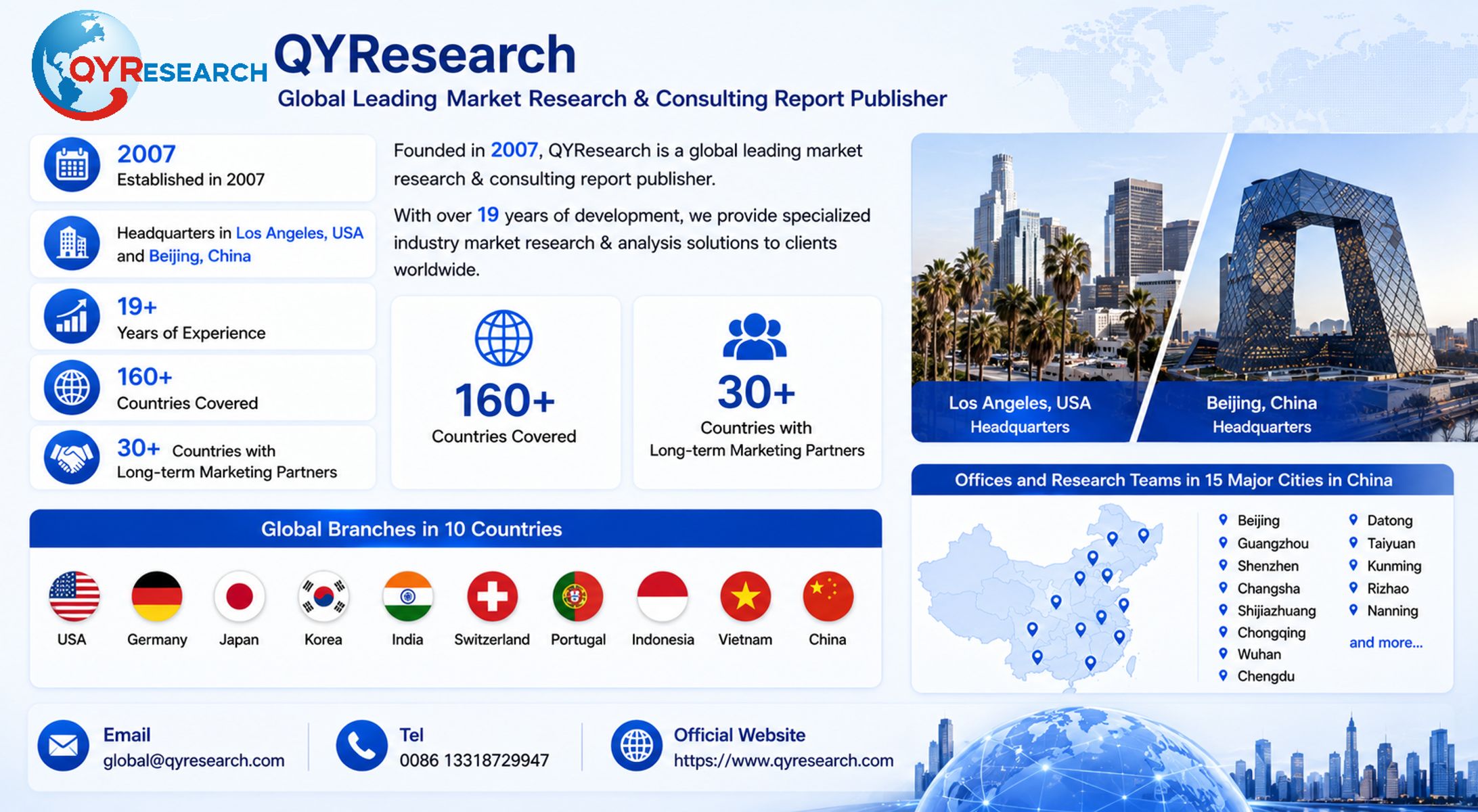
QYResearch founded in California, USA in 2007, which is a leading global market research and consulting company. Our primary business include market research reports, custom reports, commissioned research, IPO consultancy, business plans, etc. With over 19 years of experience and a dedicated research team, we are well placed to provide useful information and data for your business, and we have established offices in 7 countries (include United States, Germany, Switzerland, Japan, Korea, China and India) and business partners in over 30 countries. We have provided industrial information services to more than 60,000 companies in over the world.
Contact Us:
If you have any queries regarding this report or if you would like further information, please contact us:
QY Research Inc.
Add: 17890 Castleton Street Suite 369 City of Industry CA 91748 United States
EN: https://www.qyresearch.com
E-mail: global@qyresearch.com
Tel: 001-626-842-1666(US)
JP: https://www.qyresearch.co.jp
クレジット
イラストレーター


あなたのforiioを無料で作成
Infant Sleep Monitor Research:compound annual growth rate of about 9.16% during 2026–2032
The global market for Infant Sleep Monitor was estimated to be worth US$ 1462 million in 2025 and is projected to reach US$ 2686 million, growing at a CAGR of 9.2% from 2026 to 2032.
Global Market Research Publisher QYResearch (QY Research) announces the release of its latest report “Infant Sleep Monitor - Global Market Share and Ranking, Overall Sales and Demand Forecast 2026-2032”. Based on 2025 market situation and impact historical analysis (2021-2025) and forecast calculations (2026-2032), this report provides a comprehensive analysis of the global Infant Sleep Monitor market, including market size, market share, market volume, demand, industry development status, and forecasts for the next few years.
The report provides advanced statistics and information on global market conditions and studies the strategic patterns adopted by renowned players across the globe. As the market is constantly changing, the report explores competition, supply and demand trends, as well as the key factors that contribute to its changing demands across many markets.
【Get a free sample PDF of this report (Including Full TOC, List of Tables & Figures, Chart)】
https://www.qyresearch.com/reports/5903350/infant-sleep-monitor
Infant sleep monitors are evolving from traditional audio and video baby-monitoring devices into intelligent parenting systems that integrate sensing, artificial intelligence, mobile connectivity and cloud-based analytics. These devices are designed to help caregivers monitor infants during sleep by tracking video, audio, movement, room conditions and selected physiological indicators. With growing awareness of scientific parenting, increasing smart-home adoption and rising demand for remote childcare solutions, infant sleep monitors are becoming an important category within connected maternal and infant care products.
The global Infant Sleep Monitor market reached approximately US$1,461.52 million in 2025 and is expected to grow to approximately US$2,686.00 million by 2032, representing a CAGR of about 9.16% during 2026–2032. Market expansion is driven by increasing demand for smart parenting devices, improvements in AI recognition technology, wider smartphone adoption, and growing interest in sleep quality management. Future growth will be concentrated in premium smart cameras, wearable monitoring devices, non-contact breathing-motion monitoring, AI-powered sleep analysis and integrated smart-home solutions.
Infant sleep monitors typically include smart cameras, microphones, speakers, wearable sensors, under-mattress movement sensors, environmental monitoring modules, wireless communication systems, mobile applications and cloud platforms. Compared with conventional baby monitors, modern solutions provide functions such as high-definition video monitoring, night vision, two-way communication, crying detection, sleep pattern analysis, environmental alerts and remote notifications.
Market Growth Driven by Intelligent Parenting and Digital Healthcare Trends
The core growth opportunity of the infant sleep monitor market comes from the transformation of parenting habits. Parents increasingly seek data-based tools to understand infant sleep patterns, improve childcare efficiency and reduce nighttime monitoring pressure. Smart monitoring systems provide continuous observation and automated alerts, allowing caregivers to respond more efficiently.
The market is also benefiting from the expansion of smart homes and connected devices. Integration with smartphones, voice assistants and home automation platforms is improving user convenience and encouraging consumers to upgrade from basic audio monitors to multifunctional digital parenting systems.
At the same time, advances in AI algorithms, computer vision and sensor technologies are improving product capabilities. AI-based sleep analysis, facial recognition, movement detection and sound classification are becoming important differentiation factors. However, manufacturers must balance innovation with safety, accuracy and privacy protection, as false alarms and unreliable health-related claims can affect consumer trust.
Competitive Landscape and Industry Competition
The global infant sleep monitor market has a moderately concentrated competitive structure, involving smart parenting brands, consumer electronics companies, baby-care equipment manufacturers and digital health technology providers.
Representative companies include Owlet, Nanit, Withings, Philips, Motorola Mobility, VTech, Samsung, iBaby Labs, Bebcare and Snuza. Leading companies usually compete through integrated ecosystems that combine hardware, mobile applications, cloud services and data analysis capabilities.
First-tier suppliers benefit from strong brand recognition, mature sales channels, extensive customer data and continuous product innovation. They focus on premium features such as AI sleep insights, wearable health monitoring, subscription-based services and smart-home compatibility.
Second-tier and regional manufacturers compete through cost advantages, customized product designs, regional distribution networks and differentiated functions. Emerging companies are increasingly entering areas such as sensor-free monitoring, smart mattresses, AI-based sleep coaching and cloud-based parenting services.
Future competition will shift from hardware specifications toward comprehensive capabilities, including algorithm accuracy, privacy protection, false-alarm reduction, regulatory compliance, user experience and long-term customer engagement.
Product Segmentation and Application Development
Infant sleep monitors can mainly be divided into smart video monitors, wearable monitoring devices, movement and breathing-motion monitors, environmental monitoring systems and integrated smart parenting platforms.
Smart video monitors remain the largest product category due to their broad consumer acceptance and easy installation. These products provide real-time video, night vision, sound detection and remote viewing functions, making them the preferred choice for household nursery monitoring.
Wearable monitors and movement or breathing-motion monitoring devices represent higher-value segments. These products provide additional sensing capabilities and are increasingly used by parents seeking more detailed information about infant sleep behavior and physiological conditions.
Environmental monitoring functions, including temperature, humidity and air-quality detection, are becoming standard features in premium products. Future product upgrades will focus on AI-driven sleep analysis, non-contact sensing, low-power operation, improved battery life and stronger integration with smart-home ecosystems.
Application demand is mainly concentrated in home nurseries, nighttime childcare, sleep routine management and smart-home environments. Emerging applications include pediatric assistance, postpartum care services and connected family healthcare solutions.
Regional Market Opportunities and Supply Chain Development
North America remains one of the largest markets for infant sleep monitors due to strong consumer acceptance of smart parenting products, high smartphone penetration and mature digital health ecosystems. Premium products with AI analytics, wearable monitoring and subscription services have stronger adoption potential in this region.
Europe places greater emphasis on product safety, data privacy, environmental standards and regulatory compliance. Manufacturers that can provide secure data management, low-emission designs and reliable performance are more likely to succeed in premium markets.
Asia-Pacific represents the fastest-growing opportunity area. China, Japan, South Korea, Australia and Southeast Asian markets are benefiting from rising disposable income, expanding e-commerce channels, smart-home adoption and increasing demand for advanced maternal and infant products.
From a supply perspective, North America and Europe maintain advantages in brand development, algorithm technology and premium product design, while Asian manufacturers benefit from strong capabilities in electronic components, camera modules, sensors, wireless communication modules and cost-efficient manufacturing.
Future regional opportunities will focus on localized smart parenting solutions, regional data services, online retail expansion and integration with local consumer preferences.
Industry Chain Structure and Key Technology Barriers
The infant sleep monitor industry chain covers upstream electronic components, midstream product manufacturing and downstream consumer applications.
Upstream materials include image sensors, infrared components, microphones, speakers, wearable sensors, movement sensors, processors, batteries, wireless modules, displays, cloud computing infrastructure and AI development platforms.
Midstream manufacturers are responsible for hardware integration, software development, sensor calibration, mobile application design, cloud services and product commercialization.
Downstream applications include household childcare, maternal and infant retail channels, e-commerce platforms, postpartum care institutions, pediatric assistance services and smart-home ecosystems.
The main technical barriers include sensor accuracy, AI algorithm reliability, low-power system design, wireless stability, privacy protection, infant-safe material selection and software experience. Premium market value is increasingly concentrated in AI analytics, cloud services, brand ecosystems and continuous service models rather than hardware alone.
Industry Development Trends and Future Outlook
The infant sleep monitor market is expected to continue moving toward intelligent, connected and service-oriented development. Future products will increasingly combine video monitoring, environmental sensing, AI analytics, health-related functions and smart-home integration.
Several trends will shape market competition:
AI-based sleep analysis will become a key differentiation factor, helping parents understand sleep cycles, patterns and potential issues.
Non-contact monitoring technologies will gain attention because they provide greater comfort and reduce dependence on wearable devices.
Data privacy and security will become essential purchasing factors as connected parenting devices collect increasing amounts of family information.
Hardware-service integration will accelerate, with subscription models, cloud analytics and digital parenting services becoming important revenue sources.
Emerging markets, especially Asia-Pacific regions, will provide significant growth opportunities as consumer demand for premium childcare technology increases.
Overall, the global infant sleep monitor market is entering a stage of intelligent upgrading. Companies with strong AI capabilities, reliable sensing technology, secure data systems, efficient manufacturing and strong brand ecosystems will be better positioned to capture future growth opportunities.
The report provides a detailed analysis of the market size, growth potential, and key trends for each segment. Through detailed analysis, industry players can identify profit opportunities, develop strategies for specific customer segments, and allocate resources effectively.
The Infant Sleep Monitor market is segmented as below:
By Company
Owlet
Nanit
Withings
Philips
Motorola Mobility (Hubble)
VTech
Samsung
iBaby Labs
Bebcare
Snuza
Segment by Type
Wearable Sensor-based Monitor
Mattress / Pad-based Monitor
Camera-based Sleep Monitor
Hybrid Monitoring System
Segment by Application
Household Consumers
Maternity Hospitals
Childcare Centers
Each chapter of the report provides detailed information for readers to further understand the Infant Sleep Monitor market:
Chapter 1: Introduces the report scope of the Infant Sleep Monitor report, global total market size (valve, volume and price). This chapter also provides the market dynamics, latest developments of the market, the driving factors and restrictive factors of the market, the challenges and risks faced by manufacturers in the industry, and the analysis of relevant policies in the industry. (2021-2032)
Chapter 2: Detailed analysis of Infant Sleep Monitor manufacturers competitive landscape, price, sales and revenue market share, latest development plan, merger, and acquisition information, etc. (2021-2026)
Chapter 3: Provides the analysis of various Infant Sleep Monitor market segments by Type, covering the market size and development potential of each market segment, to help readers find the blue ocean market in different market segments. (2021-2032)
Chapter 4: Provides the analysis of various market segments by Application, covering the market size and development potential of each market segment, to help readers find the blue ocean market in different downstream markets.(2021-2032)
Chapter 5: Sales, revenue of Infant Sleep Monitor in regional level. It provides a quantitative analysis of the market size and development potential of each region and introduces the market development, future development prospects, market space, and market size of each country in the world..(2021-2032)
Chapter 6: Sales, revenue of Infant Sleep Monitor in country level. It provides sigmate data by Type, and by Application for each country/region.(2021-2032)
Chapter 7: Provides profiles of key players, introducing the basic situation of the main companies in the market in detail, including product sales, revenue, price, gross margin, product introduction, recent development, etc. (2021-2026)
Chapter 8: Analysis of industrial chain, including the upstream and downstream of the industry.
Chapter 9: Conclusion.
Benefits of purchasing QYResearch report:
Competitive Analysis: QYResearch provides in-depth Infant Sleep Monitor competitive analysis, including information on key company profiles, new entrants, acquisitions, mergers, large market shear, opportunities, and challenges. These analyses provide clients with a comprehensive understanding of market conditions and competitive dynamics, enabling them to develop effective market strategies and maintain their competitive edge.
Industry Analysis: QYResearch provides Infant Sleep Monitor comprehensive industry data and trend analysis, including raw material analysis, market application analysis, product type analysis, market demand analysis, market supply analysis, downstream market analysis, and supply chain analysis.
and trend analysis. These analyses help clients understand the direction of industry development and make informed business decisions.
Market Size: QYResearch provides Infant Sleep Monitor market size analysis, including capacity, production, sales, production value, price, cost, and profit analysis. This data helps clients understand market size and development potential, and is an important reference for business development.
Other relevant reports of QYResearch:
Global Infant Sleep Monitor Market Research Report 2026
Global Infant Sleep Monitor Sales Market Report, Competitive Analysis and Regional Opportunities 2026-2032
Global Infant Sleep Monitor Market Outlook, In‑Depth Analysis & Forecast to 2032
To contact us and get this report: https://www.qyresearch.com/contact-us
About Us:
QYResearch founded in California, USA in 2007, which is a leading global market research and consulting company. Our primary business include market research reports, custom reports, commissioned research, IPO consultancy, business plans, etc. With over 19 years of experience and a dedicated research team, we are well placed to provide useful information and data for your business, and we have established offices in 7 countries (include United States, Germany, Switzerland, Japan, Korea, China and India) and business partners in over 30 countries. We have provided industrial information services to more than 60,000 companies in over the world.
Contact Us:
If you have any queries regarding this report or if you would like further information, please contact us:
QY Research Inc.
Add: 17890 Castleton Street Suite 369 City of Industry CA 91748 United States
EN: https://www.qyresearch.com
E-mail: global@qyresearch.com
Tel: 001-626-842-1666(US)
JP: https://www.qyresearch.co.jp
クレジット
イラストレーター