
Industrial Protocol Conversion Gateway Integration Service Research:CAGR of 6.8% from 2026 to 2032
クレジット

イラストレーター
Industrial Protocol Conversion Gateway Integration Service Research:CAGR of 6.8% from 2026 to 2032
The global market for Industrial Protocol Conversion Gateway Integration Service was estimated to be worth US$ 2950 million in 2025 and is projected to reach US$ 4676 million, growing at a CAGR of 6.8% from 2026 to 2032.
Global Market Research Publisher QYResearch (QY Research) announces the release of its latest report “Industrial Protocol Conversion Gateway Integration Service - Global Market Share and Ranking, Overall Sales and Demand Forecast 2026-2032”. Based on 2025 market situation and impact historical analysis (2021-2025) and forecast calculations (2026-2032), this report provides a comprehensive analysis of the global Industrial Protocol Conversion Gateway Integration Service market, including market size, market share, market volume, demand, industry development status, and forecasts for the next few years.
The report provides advanced statistics and information on global market conditions and studies the strategic patterns adopted by renowned players across the globe. As the market is constantly changing, the report explores competition, supply and demand trends, as well as the key factors that contribute to its changing demands across many markets.
【Get a free sample PDF of this report (Including Full TOC, List of Tables & Figures, Chart)】
https://www.qyresearch.com/reports/6721685/industrial-protocol-conversion-gateway-integration-service
Industrial protocol conversion gateway integration services are essential solutions for achieving seamless communication and data interoperability among heterogeneous industrial devices, systems, and communication protocols. These services address the connectivity challenges caused by differences in equipment brands, interfaces, and industrial communication standards by providing comprehensive solutions covering gateway selection, deployment, protocol adaptation, data mapping, system commissioning, platform integration, and long-term technical support.
Industrial protocol conversion gateway integration services typically support a wide range of industrial assets, including PLCs, sensors, instruments, variable frequency drives (VFDs), robots, CNC machines, DCS systems, SCADA platforms, MES systems, and Industrial Internet platforms. Through protocol conversion, edge data acquisition, format transformation, intelligent processing, and secure transmission, these services enable field-level equipment data to be converted into standardized information that can be effectively managed and analyzed by higher-level digital platforms.
With the rapid development of smart manufacturing, industrial digitalization, and Industrial Internet ecosystems, protocol conversion gateway integration services have become a fundamental connectivity layer supporting applications such as intelligent factories, energy management, petrochemical automation, water treatment, building automation, rail transportation, and industrial cloud platforms.
Industry Chain Overview
The upstream segment of the industrial protocol conversion gateway integration service industry mainly consists of industrial communication chips, embedded modules, edge computing hardware, gateway devices, industrial protocol stacks, I/O modules, industrial switches, routers, wireless communication equipment, fieldbus components, power supplies, cabinet accessories, and industrial cybersecurity solutions.
Industrial protocol stacks represent a critical foundation of the upstream supply chain. Common protocols include Modbus, PROFINET, EtherNet/IP, OPC UA, CAN, CANopen, BACnet, EtherCAT, Profibus, and MQTT. These technologies determine the ability of gateway systems to achieve communication compatibility, data exchange, and interoperability among different industrial devices.
Industrial gateway hardware and edge computing modules serve as the core physical foundation for data acquisition, protocol parsing, local computing, and data forwarding. Improvements in processing capability, communication stability, cybersecurity, and environmental adaptability directly influence the performance of integrated solutions.
The midstream segment represents the core service delivery stage, involving industrial automation integrators, Industrial Internet solution providers, gateway manufacturers, and engineering service companies. These providers deliver complete integration services, including equipment surveys, communication architecture analysis, protocol identification, gateway configuration, data point mapping, interface debugging, platform connection, system testing, cybersecurity deployment, operation monitoring, and maintenance support.
The key competitiveness of midstream companies lies not only in hardware supply but also in their ability to solve complex industrial connectivity challenges. Strong providers typically possess extensive protocol libraries, industry-specific integration experience, engineering capabilities, and the ability to support multi-brand and multi-system environments.
The downstream application market covers intelligent manufacturing, energy and power, petrochemicals, semiconductor and electronics manufacturing, water utilities, transportation, building automation, and other industrial fields.
In smart manufacturing scenarios, these services enable communication between production equipment such as PLCs, robots, sensors, and CNC machines and enterprise-level systems such as MES, SCADA, ERP, and Industrial Internet platforms.
In energy and power applications, protocol conversion gateways support data collection and remote monitoring for substations, energy storage systems, renewable energy equipment, and power management platforms.
In petrochemical and process industries, these solutions facilitate communication between distributed control systems, instrumentation equipment, safety systems, and production management platforms.
Overall, industrial protocol conversion gateway integration services play a fundamental role in eliminating industrial data silos, improving equipment utilization efficiency, accelerating digital transformation, and enabling enterprises to build connected and intelligent industrial ecosystems.
Market Development Drivers
3.1 Smart Manufacturing Transformation Accelerates Equipment Connectivity Demand
The global advancement of smart manufacturing is generating strong demand for industrial equipment interconnection and system integration. Manufacturing enterprises are increasingly deploying digital workshops, smart factories, flexible production lines, and equipment monitoring platforms, requiring seamless communication between field devices and enterprise information systems.
However, industrial environments typically contain equipment from multiple suppliers with different communication protocols, interfaces, and data structures. Simply installing gateway hardware is often insufficient; enterprises require professional integration services covering protocol identification, data mapping, system configuration, and commissioning.
As a result, industrial protocol conversion gateway integration services are becoming increasingly important as a bridge between traditional automation systems and modern digital manufacturing platforms.
3.2 Legacy Equipment Networking Creates Significant Upgrade Opportunities
A large number of factories, power facilities, water treatment plants, and petrochemical sites continue to operate legacy equipment based on traditional communication technologies such as RS-232, RS-485, Modbus RTU, CAN, and Profibus.
Replacing these systems completely requires significant investment and may introduce production interruption risks. Therefore, enterprises increasingly prefer network upgrades through protocol conversion gateways, allowing existing equipment to connect with modern SCADA systems, cloud platforms, and Industrial Internet solutions.
This cost-effective modernization approach creates substantial opportunities for industrial integration service providers.
3.3 Industrial Internet Development Drives Edge-to-Cloud Connectivity
The rapid adoption of Industrial Internet platforms is changing the role of protocol conversion gateways from simple communication devices into intelligent edge connectivity solutions.
Modern enterprises require equipment data to be integrated with cloud platforms, MES systems, predictive maintenance platforms, and industrial data management systems. Therefore, service providers must deliver more advanced capabilities, including edge computing, data filtering, local analytics, remote monitoring, and secure cloud connectivity.
The transition from traditional "protocol conversion" toward "edge-to-cloud integration" is becoming a major growth trend in the industry.
3.4 Multi-Protocol and Multi-Brand Environments Increase Demand for Professional Services
Industrial production environments commonly involve automation equipment from various manufacturers, including Siemens, Rockwell Automation, Schneider Electric, Mitsubishi Electric, Omron, and Delta.
The coexistence of multiple communication standards creates complex integration requirements. Companies with strong engineering experience, comprehensive protocol databases, and industry-specific solutions can significantly shorten project implementation cycles and reduce deployment risks.
Therefore, professional integration services combining protocol adaptation, system commissioning, and operational support are gaining increasing market value.
Market Challenges
4.1 High Protocol Diversity Increases Integration Complexity
Industrial communication environments remain highly fragmented, with numerous protocols and proprietary communication methods existing simultaneously. Different manufacturers may adopt customized data formats, register structures, and communication mechanisms.
This diversity increases engineering requirements and makes it difficult to develop fully standardized integration solutions.
4.2 Customized Projects Limit Scalability
Industrial protocol conversion projects often require detailed on-site surveys, equipment identification, network analysis, point table organization, data mapping, and system testing.
Even when the same protocol is used, differences between factories and equipment models can result in unique implementation requirements. Consequently, project delivery still depends heavily on engineering expertise, making large-scale replication challenging.
4.3 Legacy System Upgrades Require High Reliability
Many customers require integration with equipment that has operated for many years. During retrofit projects, incorrect configuration, communication failures, or unexpected data abnormalities may affect production operations.
Therefore, customers place strong emphasis on implementation reliability, engineering experience, and after-sales technical support.
4.4 Increasing Industrial Cybersecurity Requirements
Industrial protocol conversion gateways often connect operational technology (OT) systems with IT networks, cloud platforms, and remote management systems. This increases cybersecurity requirements.
Service providers must increasingly integrate security functions such as access control, encrypted communication, network isolation, vulnerability management, remote security monitoring, and firmware updates, which increases project complexity and service costs.
Future Development Opportunities
5.1 Intelligent Manufacturing Expansion Will Continue Driving Market Growth
The continued construction of smart factories and digital production systems will create sustained demand for industrial connectivity solutions. Enterprises require reliable communication channels connecting equipment, production systems, and digital platforms, creating long-term opportunities for protocol conversion gateway integration services.
5.2 Industrial Edge Computing Will Increase Service Value
Future industrial gateways will evolve beyond basic communication conversion and provide intelligent edge capabilities, including data cleaning, local storage, anomaly detection, rule-based processing, remote diagnostics, and predictive maintenance support.
This evolution will enable service providers to move from simple installation projects toward higher-value industrial data management solutions.
5.3 Energy, Utilities, and Process Industries Offer Stable Demand
Industries such as energy, water treatment, oil and gas, and petrochemicals feature geographically distributed equipment, complex operating environments, and strong requirements for remote monitoring and secure communication.
These characteristics create continuous demand for industrial protocol conversion gateway integration services, particularly for applications involving equipment modernization, remote operation, and intelligent asset management.
5.4 Integration with Industrial Cloud Platforms Creates New Business Models
As industrial enterprises increasingly adopt cloud-based manufacturing platforms, protocol conversion gateway services will become an important foundation for connecting physical equipment with digital ecosystems.
Future market growth will increasingly come from integrated solutions combining gateway hardware, edge computing, cloud connectivity, cybersecurity, and lifecycle operation services.
The report provides a detailed analysis of the market size, growth potential, and key trends for each segment. Through detailed analysis, industry players can identify profit opportunities, develop strategies for specific customer segments, and allocate resources effectively.
The Industrial Protocol Conversion Gateway Integration Service market is segmented as below:
By Company
HMS Networks
Phoenix Contact
Hilscher
Softing Industrial
Schneider Electric
ADFweb
SENECA
ProSoft Technology
Real Time Automation
Moxa
Advantech
ICP DAS
InHand Networks
Robustel
Four-Faith
3onedata
CONTEC
Azbil
Segment by Type
Low-Speed Acquisition Gateway Service (Acquisition Cycle ≥ 1 s)
Medium-Speed Acquisition Gateway Service (Acquisition Cycle: 100 ms – 1 s)
High-Speed Acquisition Gateway Service (Acquisition Cycle < 100 ms)
Segment by Application
Smart Manufacturing
Industrial Internet
Energy & Power
Petrochemicals
Semiconductors & Electronics
Others
Each chapter of the report provides detailed information for readers to further understand the Industrial Protocol Conversion Gateway Integration Service market:
Chapter 1: Introduces the report scope of the Industrial Protocol Conversion Gateway Integration Service report, global total market size (valve, volume and price). This chapter also provides the market dynamics, latest developments of the market, the driving factors and restrictive factors of the market, the challenges and risks faced by manufacturers in the industry, and the analysis of relevant policies in the industry. (2021-2032)
Chapter 2: Detailed analysis of Industrial Protocol Conversion Gateway Integration Service manufacturers competitive landscape, price, sales and revenue market share, latest development plan, merger, and acquisition information, etc. (2021-2026)
Chapter 3: Provides the analysis of various Industrial Protocol Conversion Gateway Integration Service market segments by Type, covering the market size and development potential of each market segment, to help readers find the blue ocean market in different market segments. (2021-2032)
Chapter 4: Provides the analysis of various market segments by Application, covering the market size and development potential of each market segment, to help readers find the blue ocean market in different downstream markets.(2021-2032)
Chapter 5: Sales, revenue of Industrial Protocol Conversion Gateway Integration Service in regional level. It provides a quantitative analysis of the market size and development potential of each region and introduces the market development, future development prospects, market space, and market size of each country in the world..(2021-2032)
Chapter 6: Sales, revenue of Industrial Protocol Conversion Gateway Integration Service in country level. It provides sigmate data by Type, and by Application for each country/region.(2021-2032)
Chapter 7: Provides profiles of key players, introducing the basic situation of the main companies in the market in detail, including product sales, revenue, price, gross margin, product introduction, recent development, etc. (2021-2026)
Chapter 8: Analysis of industrial chain, including the upstream and downstream of the industry.
Chapter 9: Conclusion.
Benefits of purchasing QYResearch report:
Competitive Analysis: QYResearch provides in-depth Industrial Protocol Conversion Gateway Integration Service competitive analysis, including information on key company profiles, new entrants, acquisitions, mergers, large market shear, opportunities, and challenges. These analyses provide clients with a comprehensive understanding of market conditions and competitive dynamics, enabling them to develop effective market strategies and maintain their competitive edge.
Industry Analysis: QYResearch provides Industrial Protocol Conversion Gateway Integration Service comprehensive industry data and trend analysis, including raw material analysis, market application analysis, product type analysis, market demand analysis, market supply analysis, downstream market analysis, and supply chain analysis.
and trend analysis. These analyses help clients understand the direction of industry development and make informed business decisions.
Market Size: QYResearch provides Industrial Protocol Conversion Gateway Integration Service market size analysis, including capacity, production, sales, production value, price, cost, and profit analysis. This data helps clients understand market size and development potential, and is an important reference for business development.
Other relevant reports of QYResearch:
Global Industrial Protocol Conversion Gateway Integration Service Sales Market Report, Competitive Analysis and Regional Opportunities 2026-2032
Global Industrial Protocol Conversion Gateway Integration Service Market Outlook, In‑Depth Analysis & Forecast to 2032
Global Industrial Protocol Conversion Gateway Integration Service Market Research Report 2026
To contact us and get this report: https://www.qyresearch.com/contact-us
About Us:
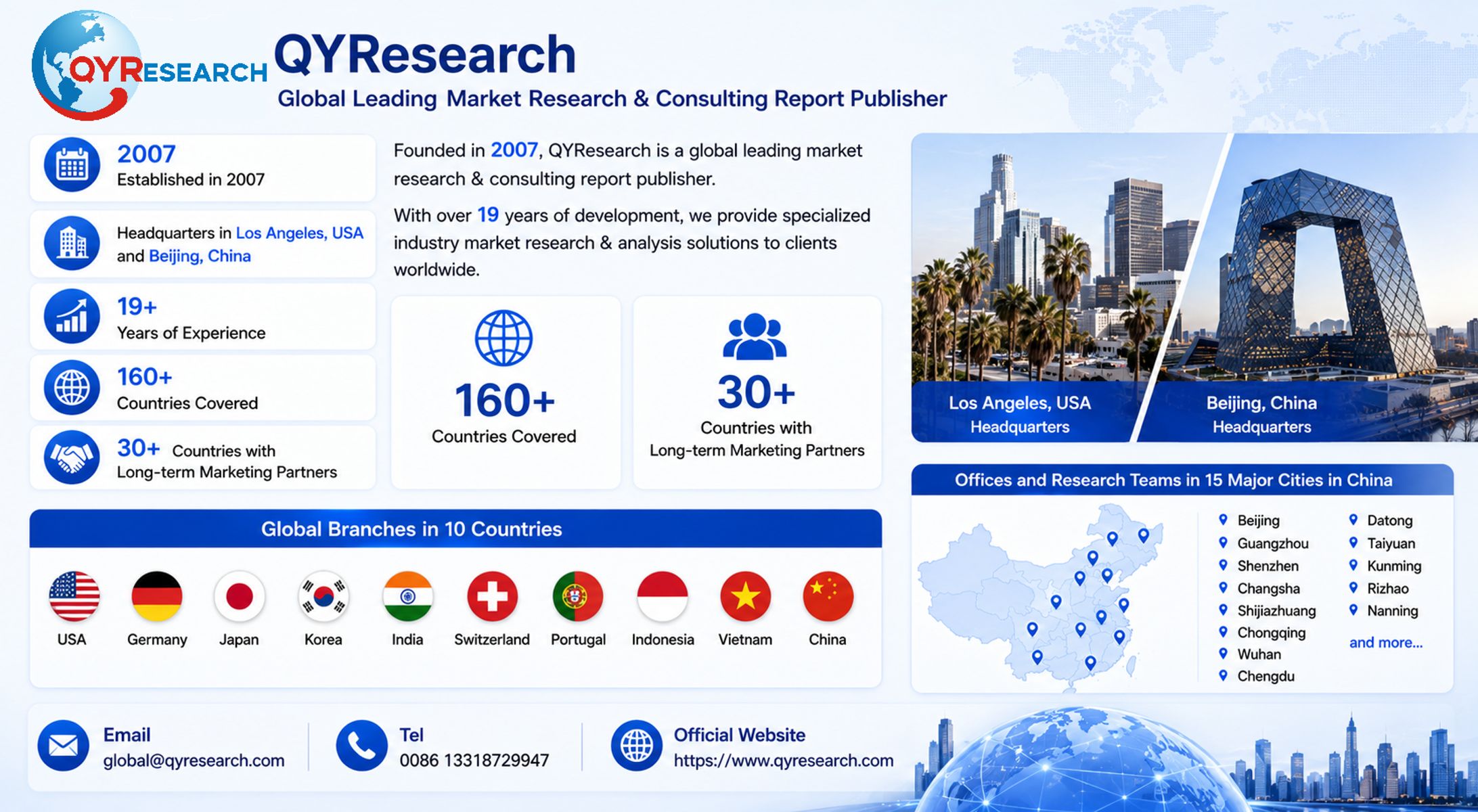
QYResearch founded in California, USA in 2007, which is a leading global market research and consulting company. Our primary business include market research reports, custom reports, commissioned research, IPO consultancy, business plans, etc. With over 19 years of experience and a dedicated research team, we are well placed to provide useful information and data for your business, and we have established offices in 7 countries (include United States, Germany, Switzerland, Japan, Korea, China and India) and business partners in over 30 countries. We have provided industrial information services to more than 60,000 companies in over the world.
Contact Us:
If you have any queries regarding this report or if you would like further information, please contact us:
QY Research Inc.
Add: 17890 Castleton Street Suite 369 City of Industry CA 91748 United States
EN: https://www.qyresearch.com
E-mail: global@qyresearch.com
Tel: 001-626-842-1666(US)
JP: https://www.qyresearch.co.jp
クレジット
イラストレーター


あなたのforiioを無料で作成
Industrial Protocol Conversion Gateway Integration Service Research:CAGR of 6.8% from 2026 to 2032
The global market for Industrial Protocol Conversion Gateway Integration Service was estimated to be worth US$ 2950 million in 2025 and is projected to reach US$ 4676 million, growing at a CAGR of 6.8% from 2026 to 2032.
Global Market Research Publisher QYResearch (QY Research) announces the release of its latest report “Industrial Protocol Conversion Gateway Integration Service - Global Market Share and Ranking, Overall Sales and Demand Forecast 2026-2032”. Based on 2025 market situation and impact historical analysis (2021-2025) and forecast calculations (2026-2032), this report provides a comprehensive analysis of the global Industrial Protocol Conversion Gateway Integration Service market, including market size, market share, market volume, demand, industry development status, and forecasts for the next few years.
The report provides advanced statistics and information on global market conditions and studies the strategic patterns adopted by renowned players across the globe. As the market is constantly changing, the report explores competition, supply and demand trends, as well as the key factors that contribute to its changing demands across many markets.
【Get a free sample PDF of this report (Including Full TOC, List of Tables & Figures, Chart)】
https://www.qyresearch.com/reports/6721685/industrial-protocol-conversion-gateway-integration-service
Industrial protocol conversion gateway integration services are essential solutions for achieving seamless communication and data interoperability among heterogeneous industrial devices, systems, and communication protocols. These services address the connectivity challenges caused by differences in equipment brands, interfaces, and industrial communication standards by providing comprehensive solutions covering gateway selection, deployment, protocol adaptation, data mapping, system commissioning, platform integration, and long-term technical support.
Industrial protocol conversion gateway integration services typically support a wide range of industrial assets, including PLCs, sensors, instruments, variable frequency drives (VFDs), robots, CNC machines, DCS systems, SCADA platforms, MES systems, and Industrial Internet platforms. Through protocol conversion, edge data acquisition, format transformation, intelligent processing, and secure transmission, these services enable field-level equipment data to be converted into standardized information that can be effectively managed and analyzed by higher-level digital platforms.
With the rapid development of smart manufacturing, industrial digitalization, and Industrial Internet ecosystems, protocol conversion gateway integration services have become a fundamental connectivity layer supporting applications such as intelligent factories, energy management, petrochemical automation, water treatment, building automation, rail transportation, and industrial cloud platforms.
Industry Chain Overview
The upstream segment of the industrial protocol conversion gateway integration service industry mainly consists of industrial communication chips, embedded modules, edge computing hardware, gateway devices, industrial protocol stacks, I/O modules, industrial switches, routers, wireless communication equipment, fieldbus components, power supplies, cabinet accessories, and industrial cybersecurity solutions.
Industrial protocol stacks represent a critical foundation of the upstream supply chain. Common protocols include Modbus, PROFINET, EtherNet/IP, OPC UA, CAN, CANopen, BACnet, EtherCAT, Profibus, and MQTT. These technologies determine the ability of gateway systems to achieve communication compatibility, data exchange, and interoperability among different industrial devices.
Industrial gateway hardware and edge computing modules serve as the core physical foundation for data acquisition, protocol parsing, local computing, and data forwarding. Improvements in processing capability, communication stability, cybersecurity, and environmental adaptability directly influence the performance of integrated solutions.
The midstream segment represents the core service delivery stage, involving industrial automation integrators, Industrial Internet solution providers, gateway manufacturers, and engineering service companies. These providers deliver complete integration services, including equipment surveys, communication architecture analysis, protocol identification, gateway configuration, data point mapping, interface debugging, platform connection, system testing, cybersecurity deployment, operation monitoring, and maintenance support.
The key competitiveness of midstream companies lies not only in hardware supply but also in their ability to solve complex industrial connectivity challenges. Strong providers typically possess extensive protocol libraries, industry-specific integration experience, engineering capabilities, and the ability to support multi-brand and multi-system environments.
The downstream application market covers intelligent manufacturing, energy and power, petrochemicals, semiconductor and electronics manufacturing, water utilities, transportation, building automation, and other industrial fields.
In smart manufacturing scenarios, these services enable communication between production equipment such as PLCs, robots, sensors, and CNC machines and enterprise-level systems such as MES, SCADA, ERP, and Industrial Internet platforms.
In energy and power applications, protocol conversion gateways support data collection and remote monitoring for substations, energy storage systems, renewable energy equipment, and power management platforms.
In petrochemical and process industries, these solutions facilitate communication between distributed control systems, instrumentation equipment, safety systems, and production management platforms.
Overall, industrial protocol conversion gateway integration services play a fundamental role in eliminating industrial data silos, improving equipment utilization efficiency, accelerating digital transformation, and enabling enterprises to build connected and intelligent industrial ecosystems.
Market Development Drivers
3.1 Smart Manufacturing Transformation Accelerates Equipment Connectivity Demand
The global advancement of smart manufacturing is generating strong demand for industrial equipment interconnection and system integration. Manufacturing enterprises are increasingly deploying digital workshops, smart factories, flexible production lines, and equipment monitoring platforms, requiring seamless communication between field devices and enterprise information systems.
However, industrial environments typically contain equipment from multiple suppliers with different communication protocols, interfaces, and data structures. Simply installing gateway hardware is often insufficient; enterprises require professional integration services covering protocol identification, data mapping, system configuration, and commissioning.
As a result, industrial protocol conversion gateway integration services are becoming increasingly important as a bridge between traditional automation systems and modern digital manufacturing platforms.
3.2 Legacy Equipment Networking Creates Significant Upgrade Opportunities
A large number of factories, power facilities, water treatment plants, and petrochemical sites continue to operate legacy equipment based on traditional communication technologies such as RS-232, RS-485, Modbus RTU, CAN, and Profibus.
Replacing these systems completely requires significant investment and may introduce production interruption risks. Therefore, enterprises increasingly prefer network upgrades through protocol conversion gateways, allowing existing equipment to connect with modern SCADA systems, cloud platforms, and Industrial Internet solutions.
This cost-effective modernization approach creates substantial opportunities for industrial integration service providers.
3.3 Industrial Internet Development Drives Edge-to-Cloud Connectivity
The rapid adoption of Industrial Internet platforms is changing the role of protocol conversion gateways from simple communication devices into intelligent edge connectivity solutions.
Modern enterprises require equipment data to be integrated with cloud platforms, MES systems, predictive maintenance platforms, and industrial data management systems. Therefore, service providers must deliver more advanced capabilities, including edge computing, data filtering, local analytics, remote monitoring, and secure cloud connectivity.
The transition from traditional "protocol conversion" toward "edge-to-cloud integration" is becoming a major growth trend in the industry.
3.4 Multi-Protocol and Multi-Brand Environments Increase Demand for Professional Services
Industrial production environments commonly involve automation equipment from various manufacturers, including Siemens, Rockwell Automation, Schneider Electric, Mitsubishi Electric, Omron, and Delta.
The coexistence of multiple communication standards creates complex integration requirements. Companies with strong engineering experience, comprehensive protocol databases, and industry-specific solutions can significantly shorten project implementation cycles and reduce deployment risks.
Therefore, professional integration services combining protocol adaptation, system commissioning, and operational support are gaining increasing market value.
Market Challenges
4.1 High Protocol Diversity Increases Integration Complexity
Industrial communication environments remain highly fragmented, with numerous protocols and proprietary communication methods existing simultaneously. Different manufacturers may adopt customized data formats, register structures, and communication mechanisms.
This diversity increases engineering requirements and makes it difficult to develop fully standardized integration solutions.
4.2 Customized Projects Limit Scalability
Industrial protocol conversion projects often require detailed on-site surveys, equipment identification, network analysis, point table organization, data mapping, and system testing.
Even when the same protocol is used, differences between factories and equipment models can result in unique implementation requirements. Consequently, project delivery still depends heavily on engineering expertise, making large-scale replication challenging.
4.3 Legacy System Upgrades Require High Reliability
Many customers require integration with equipment that has operated for many years. During retrofit projects, incorrect configuration, communication failures, or unexpected data abnormalities may affect production operations.
Therefore, customers place strong emphasis on implementation reliability, engineering experience, and after-sales technical support.
4.4 Increasing Industrial Cybersecurity Requirements
Industrial protocol conversion gateways often connect operational technology (OT) systems with IT networks, cloud platforms, and remote management systems. This increases cybersecurity requirements.
Service providers must increasingly integrate security functions such as access control, encrypted communication, network isolation, vulnerability management, remote security monitoring, and firmware updates, which increases project complexity and service costs.
Future Development Opportunities
5.1 Intelligent Manufacturing Expansion Will Continue Driving Market Growth
The continued construction of smart factories and digital production systems will create sustained demand for industrial connectivity solutions. Enterprises require reliable communication channels connecting equipment, production systems, and digital platforms, creating long-term opportunities for protocol conversion gateway integration services.
5.2 Industrial Edge Computing Will Increase Service Value
Future industrial gateways will evolve beyond basic communication conversion and provide intelligent edge capabilities, including data cleaning, local storage, anomaly detection, rule-based processing, remote diagnostics, and predictive maintenance support.
This evolution will enable service providers to move from simple installation projects toward higher-value industrial data management solutions.
5.3 Energy, Utilities, and Process Industries Offer Stable Demand
Industries such as energy, water treatment, oil and gas, and petrochemicals feature geographically distributed equipment, complex operating environments, and strong requirements for remote monitoring and secure communication.
These characteristics create continuous demand for industrial protocol conversion gateway integration services, particularly for applications involving equipment modernization, remote operation, and intelligent asset management.
5.4 Integration with Industrial Cloud Platforms Creates New Business Models
As industrial enterprises increasingly adopt cloud-based manufacturing platforms, protocol conversion gateway services will become an important foundation for connecting physical equipment with digital ecosystems.
Future market growth will increasingly come from integrated solutions combining gateway hardware, edge computing, cloud connectivity, cybersecurity, and lifecycle operation services.
The report provides a detailed analysis of the market size, growth potential, and key trends for each segment. Through detailed analysis, industry players can identify profit opportunities, develop strategies for specific customer segments, and allocate resources effectively.
The Industrial Protocol Conversion Gateway Integration Service market is segmented as below:
By Company
HMS Networks
Phoenix Contact
Hilscher
Softing Industrial
Schneider Electric
ADFweb
SENECA
ProSoft Technology
Real Time Automation
Moxa
Advantech
ICP DAS
InHand Networks
Robustel
Four-Faith
3onedata
CONTEC
Azbil
Segment by Type
Low-Speed Acquisition Gateway Service (Acquisition Cycle ≥ 1 s)
Medium-Speed Acquisition Gateway Service (Acquisition Cycle: 100 ms – 1 s)
High-Speed Acquisition Gateway Service (Acquisition Cycle < 100 ms)
Segment by Application
Smart Manufacturing
Industrial Internet
Energy & Power
Petrochemicals
Semiconductors & Electronics
Others
Each chapter of the report provides detailed information for readers to further understand the Industrial Protocol Conversion Gateway Integration Service market:
Chapter 1: Introduces the report scope of the Industrial Protocol Conversion Gateway Integration Service report, global total market size (valve, volume and price). This chapter also provides the market dynamics, latest developments of the market, the driving factors and restrictive factors of the market, the challenges and risks faced by manufacturers in the industry, and the analysis of relevant policies in the industry. (2021-2032)
Chapter 2: Detailed analysis of Industrial Protocol Conversion Gateway Integration Service manufacturers competitive landscape, price, sales and revenue market share, latest development plan, merger, and acquisition information, etc. (2021-2026)
Chapter 3: Provides the analysis of various Industrial Protocol Conversion Gateway Integration Service market segments by Type, covering the market size and development potential of each market segment, to help readers find the blue ocean market in different market segments. (2021-2032)
Chapter 4: Provides the analysis of various market segments by Application, covering the market size and development potential of each market segment, to help readers find the blue ocean market in different downstream markets.(2021-2032)
Chapter 5: Sales, revenue of Industrial Protocol Conversion Gateway Integration Service in regional level. It provides a quantitative analysis of the market size and development potential of each region and introduces the market development, future development prospects, market space, and market size of each country in the world..(2021-2032)
Chapter 6: Sales, revenue of Industrial Protocol Conversion Gateway Integration Service in country level. It provides sigmate data by Type, and by Application for each country/region.(2021-2032)
Chapter 7: Provides profiles of key players, introducing the basic situation of the main companies in the market in detail, including product sales, revenue, price, gross margin, product introduction, recent development, etc. (2021-2026)
Chapter 8: Analysis of industrial chain, including the upstream and downstream of the industry.
Chapter 9: Conclusion.
Benefits of purchasing QYResearch report:
Competitive Analysis: QYResearch provides in-depth Industrial Protocol Conversion Gateway Integration Service competitive analysis, including information on key company profiles, new entrants, acquisitions, mergers, large market shear, opportunities, and challenges. These analyses provide clients with a comprehensive understanding of market conditions and competitive dynamics, enabling them to develop effective market strategies and maintain their competitive edge.
Industry Analysis: QYResearch provides Industrial Protocol Conversion Gateway Integration Service comprehensive industry data and trend analysis, including raw material analysis, market application analysis, product type analysis, market demand analysis, market supply analysis, downstream market analysis, and supply chain analysis.
and trend analysis. These analyses help clients understand the direction of industry development and make informed business decisions.
Market Size: QYResearch provides Industrial Protocol Conversion Gateway Integration Service market size analysis, including capacity, production, sales, production value, price, cost, and profit analysis. This data helps clients understand market size and development potential, and is an important reference for business development.
Other relevant reports of QYResearch:
Global Industrial Protocol Conversion Gateway Integration Service Sales Market Report, Competitive Analysis and Regional Opportunities 2026-2032
Global Industrial Protocol Conversion Gateway Integration Service Market Outlook, In‑Depth Analysis & Forecast to 2032
Global Industrial Protocol Conversion Gateway Integration Service Market Research Report 2026
To contact us and get this report: https://www.qyresearch.com/contact-us
About Us:
QYResearch founded in California, USA in 2007, which is a leading global market research and consulting company. Our primary business include market research reports, custom reports, commissioned research, IPO consultancy, business plans, etc. With over 19 years of experience and a dedicated research team, we are well placed to provide useful information and data for your business, and we have established offices in 7 countries (include United States, Germany, Switzerland, Japan, Korea, China and India) and business partners in over 30 countries. We have provided industrial information services to more than 60,000 companies in over the world.
Contact Us:
If you have any queries regarding this report or if you would like further information, please contact us:
QY Research Inc.
Add: 17890 Castleton Street Suite 369 City of Industry CA 91748 United States
EN: https://www.qyresearch.com
E-mail: global@qyresearch.com
Tel: 001-626-842-1666(US)
JP: https://www.qyresearch.co.jp
クレジット
イラストレーター