
Lithium-ion Battery for Uninterruptible Power Supply (UPS) Market Research: growing at a CAGR of 38.9% from 2026 to 2032
クレジット

イラストレーター
Lithium-ion Battery for Uninterruptible Power Supply (UPS) Market Research: growing at a CAGR of 38.9% from 2026 to 2032
The global market for Lithium-ion Battery for Uninterruptible Power Supply (UPS) was estimated to be worth US$ 565 million in 2025 and is projected to reach US$ 5609 million, growing at a CAGR of 38.9% from 2026 to 2032.
Global Market Research Publisher QYResearch (QY Research) announces the release of its latest report “Lithium-ion Battery for Uninterruptible Power Supply (UPS) - Global Market Share and Ranking, Overall Sales and Demand Forecast 2026-2032”. Based on 2025 market situation and impact historical analysis (2021-2025) and forecast calculations (2026-2032), this report provides a comprehensive analysis of the global Lithium-ion Battery for Uninterruptible Power Supply (UPS) market, including market size, market share, market volume, demand, industry development status, and forecasts for the next few years.
The report provides advanced statistics and information on global market conditions and studies the strategic patterns adopted by renowned players across the globe. As the market is constantly changing, the report explores competition, supply and demand trends, as well as the key factors that contribute to its changing demands across many markets.
【Get a free sample PDF of this report (Including Full TOC, List of Tables & Figures, Chart)】
https://www.qyresearch.com/reports/6290022/lithium-ion-battery-for-uninterruptible-power-supply--ups
Lithium-ion Battery for Uninterruptible Power Supply (UPS) Market Summary
Lithium-ion Battery for Uninterruptible Power Supply (UPS) refers to a lithium-based rechargeable battery product used as the backup energy source for UPS systems. It stores electrical energy and supplies DC power to the UPS when grid power fails, allowing the UPS to continue providing stable AC power to critical equipment such as data centers, communication equipment, industrial control systems, medical devices, financial IT systems, and enterprise servers.
Global shipments of Lithium-ion Battery for UPS reached 4.5 GWh in 2025 and are projected to reach 12.8 GWh by 2028, representing a CAGR of 41.69% during 2025–2028. This rapid growth reflects the accelerating replacement of traditional lead-acid batteries by lithium-ion solutions across UPS applications.
Lithium-ion Battery for UPS Competitive Landscape
Key players in the global Lithium-ion Battery for UPS market include CATL, Vision Group, Shuangdeng Group, Narada Power, and Samsung SDI. In 2025, the top five players account for approximately 45.5% of market share in terms of shipment volume, indicating a moderately concentrated competitive landscape with significant participation from both global battery leaders and regional specialists.
Market Segmentation
By Application, Data Center is the largest application segment, holding a share of 58%. This dominant position reflects the critical role of lithium-ion UPS batteries in ensuring uninterrupted power for hyperscale, colocation, and edge data centers, where footprint efficiency, cycle life, and total cost of ownership advantages over lead-acid alternatives are decisive factors. Additional application segments include telecommunications, industrial control systems, medical facilities, financial IT infrastructure, and enterprise server environments, each contributing to diversified demand growth.
Regional Analysis
The global Lithium-ion Battery for UPS market spans major production and consumption regions. Shipment volumes are distributed across key manufacturing and deployment hubs, with production concentrated among established battery manufacturers and consumption driven by regions with significant data center, telecommunications, and industrial infrastructure. Regional dynamics are shaped by data center construction cycles, telecom 5G deployment, industrial automation investment, and policy support for energy storage and critical power applications. Further regional detail is available in the full report segmentation.
Industry Chain Analysis
The upstream industry chain includes raw material suppliers providing lithium compounds, cathode and anode materials, electrolytes, separators, and battery management system components. Material cost, purity, and supply stability for key inputs such as lithium carbonate, nickel, cobalt, and graphite significantly influence battery performance and production economics.
The midstream comprises lithium-ion battery cell manufacturers and UPS battery pack integrators that design, produce, and assemble battery modules configured for UPS voltage, power, and runtime requirements. Core capabilities include cell chemistry selection, thermal management design, battery management system integration, and safety certification for stationary backup power applications.
The downstream includes UPS system manufacturers, data center operators, telecom infrastructure providers, industrial facility managers, and end users in medical, financial, and enterprise sectors. These customers drive demand through new UPS installations, lead-acid replacement projects, and expanding critical power protection requirements.
Industry Development Trends, Opportunities, Obstacles, and Barriers
Development Trends
Accelerating Replacement of Lead-Acid Batteries in UPS Applications: Lithium-ion batteries are rapidly displacing traditional lead-acid batteries in UPS systems, driven by superior energy density, longer cycle life, reduced footprint, lower total cost of ownership, and declining lithium-ion cell costs. This replacement trend is most advanced in data centers but accelerating across all UPS segments.
Integration of Intelligent Battery Management and Monitoring: UPS lithium-ion battery systems are increasingly incorporating advanced battery management systems with real-time monitoring, state-of-health estimation, predictive maintenance alerts, and remote diagnostics capabilities. This intelligence layer improves reliability, extends service life, and enables condition-based maintenance strategies.
Shift toward Higher Voltage and Modular UPS Battery Architectures: UPS system designs are evolving toward higher DC bus voltages and modular battery cabinet configurations, leveraging lithium-ion's cell-to-system design flexibility to improve efficiency, scalability, and serviceability in critical power applications.
Standardization of Rack-Mounted and Containerized Battery Solutions: The industry is moving toward standardized rack-mounted battery modules and containerized energy storage solutions for UPS, simplifying deployment, reducing engineering complexity, and enabling faster capacity expansion in data center and industrial applications.
Development Opportunities
Hyperscale and Edge Data Center Expansion: The global build-out of hyperscale cloud data centers and the proliferation of edge computing facilities are creating substantial demand for lithium-ion UPS batteries that offer compact footprint, high reliability, and operational cost savings. Data center operators are increasingly specifying lithium-ion as the default UPS battery chemistry for new construction.
5G Telecommunications Infrastructure Deployment: The rollout of 5G networks requires distributed, reliable backup power for base stations, edge computing nodes, and communication hubs. Lithium-ion batteries offer weight, space, and maintenance advantages critical for rooftop, pole-mounted, and remote telecom UPS installations.
Industrial IoT and Automation Growth: Expanding industrial automation, smart manufacturing, and process control applications demand uninterruptible power for sensitive controllers, sensors, and actuators. Lithium-ion UPS batteries provide the compact, long-life backup power needed in space-constrained industrial environments.
Lifecycle Services and Battery Replacement Cycles: As the installed base of lithium-ion UPS batteries grows, recurring demand for replacement batteries, refurbishment services, and recycling solutions will create a meaningful aftermarket revenue stream. Early adopters reaching end-of-life replacement cycles will contribute to sustained demand growth.
Hindering Factors
Higher Initial Cost Compared to Lead-Acid Batteries: Despite declining lithium-ion cell prices, the upfront capital cost of lithium-ion UPS battery systems remains higher than equivalent lead-acid solutions. This initial cost premium can create adoption barriers in cost-sensitive applications and regions with limited access to capital.
Safety Concerns and Thermal Runaway Risk Management: Lithium-ion batteries require careful thermal management, charge control, and safety system design to mitigate thermal runaway risks. Safety incidents can damage end-user confidence and trigger stricter installation and fire protection requirements that increase system cost and complexity.
Recycling Infrastructure and End-of-Life Management Gaps: While lithium-ion battery recycling capacity is expanding, the infrastructure and regulatory framework for UPS battery collection, transportation, and recycling remain less mature than for lead-acid batteries, creating environmental compliance uncertainties for large-scale deployments.
Industry Barriers
Cell Manufacturing Scale and Quality Consistency: Producing high-quality, consistent lithium-ion cells suitable for stationary UPS applications requires significant manufacturing scale, precision process control, and rigorous quality management systems. Established cell manufacturers with proven track records in automotive or energy storage applications benefit from scale and quality advantages.
UPS System Integration and Certification Expertise: Integrating lithium-ion batteries into UPS systems requires specialized expertise in battery management system communication protocols, charge/discharge algorithms, and safety certification specific to stationary backup power. This integration knowledge, accumulated through product development and field deployment experience, creates a meaningful barrier.
Customer Qualification and Long Validation Cycles: Critical power end users in data center, telecom, and industrial sectors conduct extensive qualification testing, reliability validation, and vendor assessment before approving lithium-ion UPS battery suppliers. These multi-year qualification cycles and high switching costs create strong incumbency advantages for established suppliers with field-proven performance records.
Regulatory Compliance and Safety Certification: Lithium-ion batteries for UPS applications must meet evolving safety standards, building codes, and fire protection requirements that vary across regions. Maintaining compliance across multiple regulatory jurisdictions requires dedicated expertise and ongoing investment in testing and certification.
The report provides a detailed analysis of the market size, growth potential, and key trends for each segment. Through detailed analysis, industry players can identify profit opportunities, develop strategies for specific customer segments, and allocate resources effectively.
The Lithium-ion Battery for Uninterruptible Power Supply (UPS) market is segmented as below:
By Company
CATL
Vision Group
Shuangdeng Group
Narada Power
Samsung SDI
EVE Energy
Gotion
Shandong Sacred Sun Power Sources
Leoch Lithium
BYD
Saft
Kokam
Exide Technologies
GS Yuasa
Segment by Type
Prismatic Cell Battery
Pouch Cell Battery
Cylindrical Cell Battery
Segment by Application
Data Center
Communication Equipment
Industrial Manufacturing
Other
Each chapter of the report provides detailed information for readers to further understand the Lithium-ion Battery for Uninterruptible Power Supply (UPS) market:
Chapter 1: Introduces the report scope of the Lithium-ion Battery for Uninterruptible Power Supply (UPS) report, global total market size (valve, volume and price). This chapter also provides the market dynamics, latest developments of the market, the driving factors and restrictive factors of the market, the challenges and risks faced by manufacturers in the industry, and the analysis of relevant policies in the industry. (2021-2032)
Chapter 2: Detailed analysis of Lithium-ion Battery for Uninterruptible Power Supply (UPS) manufacturers competitive landscape, price, sales and revenue market share, latest development plan, merger, and acquisition information, etc. (2021-2026)
Chapter 3: Provides the analysis of various Lithium-ion Battery for Uninterruptible Power Supply (UPS) market segments by Type, covering the market size and development potential of each market segment, to help readers find the blue ocean market in different market segments. (2021-2032)
Chapter 4: Provides the analysis of various market segments by Application, covering the market size and development potential of each market segment, to help readers find the blue ocean market in different downstream markets.(2021-2032)
Chapter 5: Sales, revenue of Lithium-ion Battery for Uninterruptible Power Supply (UPS) in regional level. It provides a quantitative analysis of the market size and development potential of each region and introduces the market development, future development prospects, market space, and market size of each country in the world..(2021-2032)
Chapter 6: Sales, revenue of Lithium-ion Battery for Uninterruptible Power Supply (UPS) in country level. It provides sigmate data by Type, and by Application for each country/region.(2021-2032)
Chapter 7: Provides profiles of key players, introducing the basic situation of the main companies in the market in detail, including product sales, revenue, price, gross margin, product introduction, recent development, etc. (2021-2026)
Chapter 8: Analysis of industrial chain, including the upstream and downstream of the industry.
Chapter 9: Conclusion.
Benefits of purchasing QYResearch report:
Competitive Analysis: QYResearch provides in-depth Lithium-ion Battery for Uninterruptible Power Supply (UPS) competitive analysis, including information on key company profiles, new entrants, acquisitions, mergers, large market shear, opportunities, and challenges. These analyses provide clients with a comprehensive understanding of market conditions and competitive dynamics, enabling them to develop effective market strategies and maintain their competitive edge.
Industry Analysis: QYResearch provides Lithium-ion Battery for Uninterruptible Power Supply (UPS) comprehensive industry data and trend analysis, including raw material analysis, market application analysis, product type analysis, market demand analysis, market supply analysis, downstream market analysis, and supply chain analysis.
and trend analysis. These analyses help clients understand the direction of industry development and make informed business decisions.
Market Size: QYResearch provides Lithium-ion Battery for Uninterruptible Power Supply (UPS) market size analysis, including capacity, production, sales, production value, price, cost, and profit analysis. This data helps clients understand market size and development potential, and is an important reference for business development.
Other relevant reports of QYResearch:
Global Lithium-ion Battery for Uninterruptible Power Supply (UPS) Market Outlook, In‑Depth Analysis & Forecast to 2032
Global Lithium-ion Battery for Uninterruptible Power Supply (UPS) Market Research Report 2026
Global Lithium-ion Battery for Uninterruptible Power Supply (UPS) Sales Market Report, Competitive Analysis and Regional Opportunities 2026-2032
To contact us and get this report: https://www.qyresearch.com/contact-us
About Us:
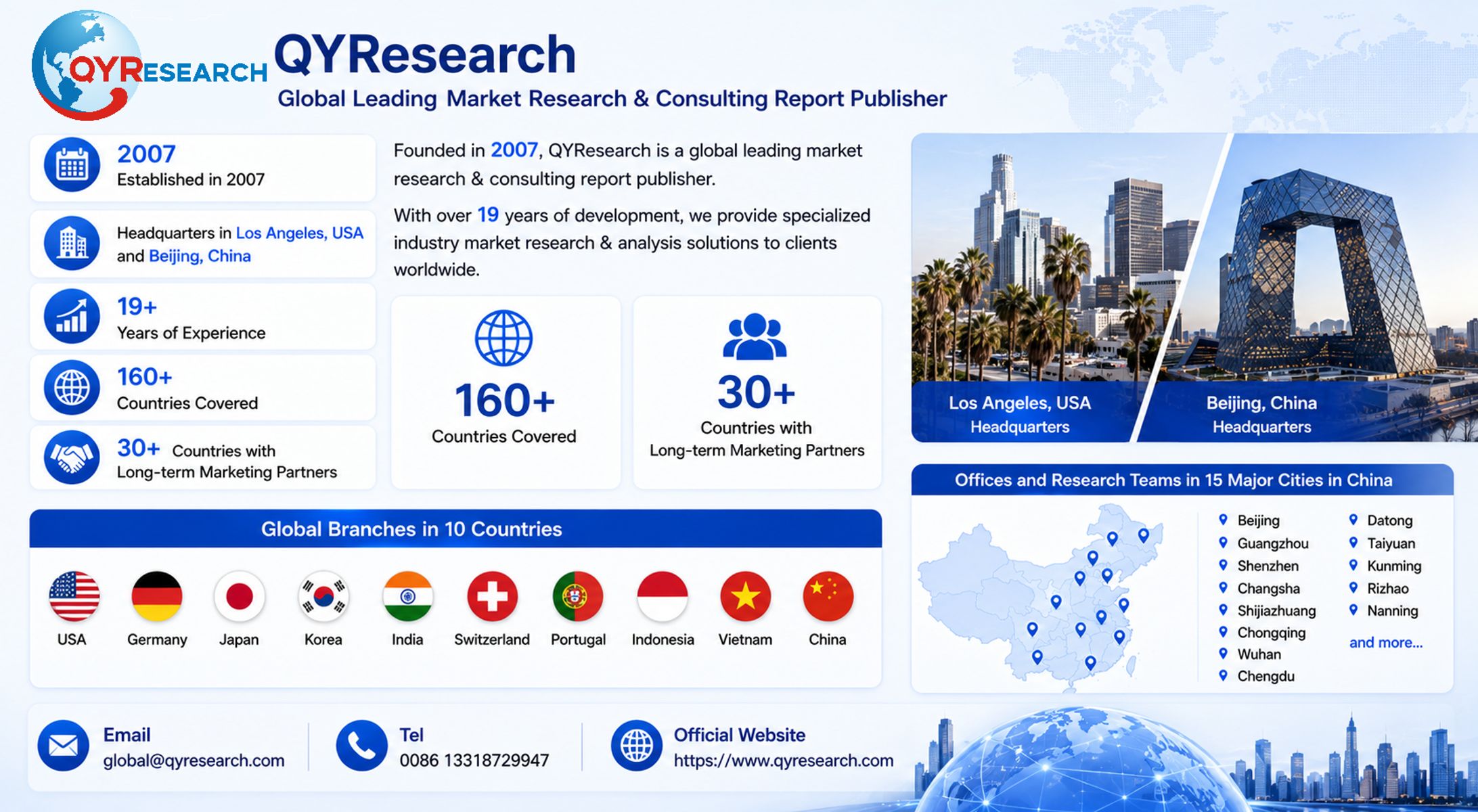
QYResearch founded in California, USA in 2007, which is a leading global market research and consulting company. Our primary business include market research reports, custom reports, commissioned research, IPO consultancy, business plans, etc. With over 19 years of experience and a dedicated research team, we are well placed to provide useful information and data for your business, and we have established offices in 7 countries (include United States, Germany, Switzerland, Japan, Korea, China and India) and business partners in over 30 countries. We have provided industrial information services to more than 60,000 companies in over the world.
Contact Us:
If you have any queries regarding this report or if you would like further information, please contact us:
QY Research Inc.
Add: 17890 Castleton Street Suite 369 City of Industry CA 91748 United States
EN: https://www.qyresearch.com
E-mail: global@qyresearch.com
Tel: 001-626-842-1666(US)
JP: https://www.qyresearch.co.jp
クレジット
イラストレーター


あなたのforiioを無料で作成
Lithium-ion Battery for Uninterruptible Power Supply (UPS) Market Research: growing at a CAGR of 38.9% from 2026 to 2032
The global market for Lithium-ion Battery for Uninterruptible Power Supply (UPS) was estimated to be worth US$ 565 million in 2025 and is projected to reach US$ 5609 million, growing at a CAGR of 38.9% from 2026 to 2032.
Global Market Research Publisher QYResearch (QY Research) announces the release of its latest report “Lithium-ion Battery for Uninterruptible Power Supply (UPS) - Global Market Share and Ranking, Overall Sales and Demand Forecast 2026-2032”. Based on 2025 market situation and impact historical analysis (2021-2025) and forecast calculations (2026-2032), this report provides a comprehensive analysis of the global Lithium-ion Battery for Uninterruptible Power Supply (UPS) market, including market size, market share, market volume, demand, industry development status, and forecasts for the next few years.
The report provides advanced statistics and information on global market conditions and studies the strategic patterns adopted by renowned players across the globe. As the market is constantly changing, the report explores competition, supply and demand trends, as well as the key factors that contribute to its changing demands across many markets.
【Get a free sample PDF of this report (Including Full TOC, List of Tables & Figures, Chart)】
https://www.qyresearch.com/reports/6290022/lithium-ion-battery-for-uninterruptible-power-supply--ups
Lithium-ion Battery for Uninterruptible Power Supply (UPS) Market Summary
Lithium-ion Battery for Uninterruptible Power Supply (UPS) refers to a lithium-based rechargeable battery product used as the backup energy source for UPS systems. It stores electrical energy and supplies DC power to the UPS when grid power fails, allowing the UPS to continue providing stable AC power to critical equipment such as data centers, communication equipment, industrial control systems, medical devices, financial IT systems, and enterprise servers.
Global shipments of Lithium-ion Battery for UPS reached 4.5 GWh in 2025 and are projected to reach 12.8 GWh by 2028, representing a CAGR of 41.69% during 2025–2028. This rapid growth reflects the accelerating replacement of traditional lead-acid batteries by lithium-ion solutions across UPS applications.
Lithium-ion Battery for UPS Competitive Landscape
Key players in the global Lithium-ion Battery for UPS market include CATL, Vision Group, Shuangdeng Group, Narada Power, and Samsung SDI. In 2025, the top five players account for approximately 45.5% of market share in terms of shipment volume, indicating a moderately concentrated competitive landscape with significant participation from both global battery leaders and regional specialists.
Market Segmentation
By Application, Data Center is the largest application segment, holding a share of 58%. This dominant position reflects the critical role of lithium-ion UPS batteries in ensuring uninterrupted power for hyperscale, colocation, and edge data centers, where footprint efficiency, cycle life, and total cost of ownership advantages over lead-acid alternatives are decisive factors. Additional application segments include telecommunications, industrial control systems, medical facilities, financial IT infrastructure, and enterprise server environments, each contributing to diversified demand growth.
Regional Analysis
The global Lithium-ion Battery for UPS market spans major production and consumption regions. Shipment volumes are distributed across key manufacturing and deployment hubs, with production concentrated among established battery manufacturers and consumption driven by regions with significant data center, telecommunications, and industrial infrastructure. Regional dynamics are shaped by data center construction cycles, telecom 5G deployment, industrial automation investment, and policy support for energy storage and critical power applications. Further regional detail is available in the full report segmentation.
Industry Chain Analysis
The upstream industry chain includes raw material suppliers providing lithium compounds, cathode and anode materials, electrolytes, separators, and battery management system components. Material cost, purity, and supply stability for key inputs such as lithium carbonate, nickel, cobalt, and graphite significantly influence battery performance and production economics.
The midstream comprises lithium-ion battery cell manufacturers and UPS battery pack integrators that design, produce, and assemble battery modules configured for UPS voltage, power, and runtime requirements. Core capabilities include cell chemistry selection, thermal management design, battery management system integration, and safety certification for stationary backup power applications.
The downstream includes UPS system manufacturers, data center operators, telecom infrastructure providers, industrial facility managers, and end users in medical, financial, and enterprise sectors. These customers drive demand through new UPS installations, lead-acid replacement projects, and expanding critical power protection requirements.
Industry Development Trends, Opportunities, Obstacles, and Barriers
Development Trends
Accelerating Replacement of Lead-Acid Batteries in UPS Applications: Lithium-ion batteries are rapidly displacing traditional lead-acid batteries in UPS systems, driven by superior energy density, longer cycle life, reduced footprint, lower total cost of ownership, and declining lithium-ion cell costs. This replacement trend is most advanced in data centers but accelerating across all UPS segments.
Integration of Intelligent Battery Management and Monitoring: UPS lithium-ion battery systems are increasingly incorporating advanced battery management systems with real-time monitoring, state-of-health estimation, predictive maintenance alerts, and remote diagnostics capabilities. This intelligence layer improves reliability, extends service life, and enables condition-based maintenance strategies.
Shift toward Higher Voltage and Modular UPS Battery Architectures: UPS system designs are evolving toward higher DC bus voltages and modular battery cabinet configurations, leveraging lithium-ion's cell-to-system design flexibility to improve efficiency, scalability, and serviceability in critical power applications.
Standardization of Rack-Mounted and Containerized Battery Solutions: The industry is moving toward standardized rack-mounted battery modules and containerized energy storage solutions for UPS, simplifying deployment, reducing engineering complexity, and enabling faster capacity expansion in data center and industrial applications.
Development Opportunities
Hyperscale and Edge Data Center Expansion: The global build-out of hyperscale cloud data centers and the proliferation of edge computing facilities are creating substantial demand for lithium-ion UPS batteries that offer compact footprint, high reliability, and operational cost savings. Data center operators are increasingly specifying lithium-ion as the default UPS battery chemistry for new construction.
5G Telecommunications Infrastructure Deployment: The rollout of 5G networks requires distributed, reliable backup power for base stations, edge computing nodes, and communication hubs. Lithium-ion batteries offer weight, space, and maintenance advantages critical for rooftop, pole-mounted, and remote telecom UPS installations.
Industrial IoT and Automation Growth: Expanding industrial automation, smart manufacturing, and process control applications demand uninterruptible power for sensitive controllers, sensors, and actuators. Lithium-ion UPS batteries provide the compact, long-life backup power needed in space-constrained industrial environments.
Lifecycle Services and Battery Replacement Cycles: As the installed base of lithium-ion UPS batteries grows, recurring demand for replacement batteries, refurbishment services, and recycling solutions will create a meaningful aftermarket revenue stream. Early adopters reaching end-of-life replacement cycles will contribute to sustained demand growth.
Hindering Factors
Higher Initial Cost Compared to Lead-Acid Batteries: Despite declining lithium-ion cell prices, the upfront capital cost of lithium-ion UPS battery systems remains higher than equivalent lead-acid solutions. This initial cost premium can create adoption barriers in cost-sensitive applications and regions with limited access to capital.
Safety Concerns and Thermal Runaway Risk Management: Lithium-ion batteries require careful thermal management, charge control, and safety system design to mitigate thermal runaway risks. Safety incidents can damage end-user confidence and trigger stricter installation and fire protection requirements that increase system cost and complexity.
Recycling Infrastructure and End-of-Life Management Gaps: While lithium-ion battery recycling capacity is expanding, the infrastructure and regulatory framework for UPS battery collection, transportation, and recycling remain less mature than for lead-acid batteries, creating environmental compliance uncertainties for large-scale deployments.
Industry Barriers
Cell Manufacturing Scale and Quality Consistency: Producing high-quality, consistent lithium-ion cells suitable for stationary UPS applications requires significant manufacturing scale, precision process control, and rigorous quality management systems. Established cell manufacturers with proven track records in automotive or energy storage applications benefit from scale and quality advantages.
UPS System Integration and Certification Expertise: Integrating lithium-ion batteries into UPS systems requires specialized expertise in battery management system communication protocols, charge/discharge algorithms, and safety certification specific to stationary backup power. This integration knowledge, accumulated through product development and field deployment experience, creates a meaningful barrier.
Customer Qualification and Long Validation Cycles: Critical power end users in data center, telecom, and industrial sectors conduct extensive qualification testing, reliability validation, and vendor assessment before approving lithium-ion UPS battery suppliers. These multi-year qualification cycles and high switching costs create strong incumbency advantages for established suppliers with field-proven performance records.
Regulatory Compliance and Safety Certification: Lithium-ion batteries for UPS applications must meet evolving safety standards, building codes, and fire protection requirements that vary across regions. Maintaining compliance across multiple regulatory jurisdictions requires dedicated expertise and ongoing investment in testing and certification.
The report provides a detailed analysis of the market size, growth potential, and key trends for each segment. Through detailed analysis, industry players can identify profit opportunities, develop strategies for specific customer segments, and allocate resources effectively.
The Lithium-ion Battery for Uninterruptible Power Supply (UPS) market is segmented as below:
By Company
CATL
Vision Group
Shuangdeng Group
Narada Power
Samsung SDI
EVE Energy
Gotion
Shandong Sacred Sun Power Sources
Leoch Lithium
BYD
Saft
Kokam
Exide Technologies
GS Yuasa
Segment by Type
Prismatic Cell Battery
Pouch Cell Battery
Cylindrical Cell Battery
Segment by Application
Data Center
Communication Equipment
Industrial Manufacturing
Other
Each chapter of the report provides detailed information for readers to further understand the Lithium-ion Battery for Uninterruptible Power Supply (UPS) market:
Chapter 1: Introduces the report scope of the Lithium-ion Battery for Uninterruptible Power Supply (UPS) report, global total market size (valve, volume and price). This chapter also provides the market dynamics, latest developments of the market, the driving factors and restrictive factors of the market, the challenges and risks faced by manufacturers in the industry, and the analysis of relevant policies in the industry. (2021-2032)
Chapter 2: Detailed analysis of Lithium-ion Battery for Uninterruptible Power Supply (UPS) manufacturers competitive landscape, price, sales and revenue market share, latest development plan, merger, and acquisition information, etc. (2021-2026)
Chapter 3: Provides the analysis of various Lithium-ion Battery for Uninterruptible Power Supply (UPS) market segments by Type, covering the market size and development potential of each market segment, to help readers find the blue ocean market in different market segments. (2021-2032)
Chapter 4: Provides the analysis of various market segments by Application, covering the market size and development potential of each market segment, to help readers find the blue ocean market in different downstream markets.(2021-2032)
Chapter 5: Sales, revenue of Lithium-ion Battery for Uninterruptible Power Supply (UPS) in regional level. It provides a quantitative analysis of the market size and development potential of each region and introduces the market development, future development prospects, market space, and market size of each country in the world..(2021-2032)
Chapter 6: Sales, revenue of Lithium-ion Battery for Uninterruptible Power Supply (UPS) in country level. It provides sigmate data by Type, and by Application for each country/region.(2021-2032)
Chapter 7: Provides profiles of key players, introducing the basic situation of the main companies in the market in detail, including product sales, revenue, price, gross margin, product introduction, recent development, etc. (2021-2026)
Chapter 8: Analysis of industrial chain, including the upstream and downstream of the industry.
Chapter 9: Conclusion.
Benefits of purchasing QYResearch report:
Competitive Analysis: QYResearch provides in-depth Lithium-ion Battery for Uninterruptible Power Supply (UPS) competitive analysis, including information on key company profiles, new entrants, acquisitions, mergers, large market shear, opportunities, and challenges. These analyses provide clients with a comprehensive understanding of market conditions and competitive dynamics, enabling them to develop effective market strategies and maintain their competitive edge.
Industry Analysis: QYResearch provides Lithium-ion Battery for Uninterruptible Power Supply (UPS) comprehensive industry data and trend analysis, including raw material analysis, market application analysis, product type analysis, market demand analysis, market supply analysis, downstream market analysis, and supply chain analysis.
and trend analysis. These analyses help clients understand the direction of industry development and make informed business decisions.
Market Size: QYResearch provides Lithium-ion Battery for Uninterruptible Power Supply (UPS) market size analysis, including capacity, production, sales, production value, price, cost, and profit analysis. This data helps clients understand market size and development potential, and is an important reference for business development.
Other relevant reports of QYResearch:
Global Lithium-ion Battery for Uninterruptible Power Supply (UPS) Market Outlook, In‑Depth Analysis & Forecast to 2032
Global Lithium-ion Battery for Uninterruptible Power Supply (UPS) Market Research Report 2026
Global Lithium-ion Battery for Uninterruptible Power Supply (UPS) Sales Market Report, Competitive Analysis and Regional Opportunities 2026-2032
To contact us and get this report: https://www.qyresearch.com/contact-us
About Us:
QYResearch founded in California, USA in 2007, which is a leading global market research and consulting company. Our primary business include market research reports, custom reports, commissioned research, IPO consultancy, business plans, etc. With over 19 years of experience and a dedicated research team, we are well placed to provide useful information and data for your business, and we have established offices in 7 countries (include United States, Germany, Switzerland, Japan, Korea, China and India) and business partners in over 30 countries. We have provided industrial information services to more than 60,000 companies in over the world.
Contact Us:
If you have any queries regarding this report or if you would like further information, please contact us:
QY Research Inc.
Add: 17890 Castleton Street Suite 369 City of Industry CA 91748 United States
EN: https://www.qyresearch.com
E-mail: global@qyresearch.com
Tel: 001-626-842-1666(US)
JP: https://www.qyresearch.co.jp
クレジット
イラストレーター