
RGB Color Sorter Market Trends: growing at a CAGR of 5.2% from 2026 to 2032
クレジット

イラストレーター
RGB Color Sorter Market Trends: growing at a CAGR of 5.2% from 2026 to 2032
QY Research Inc. (Global Market Report Research Publisher) announces the release of 2025 latest report “RGB Color Sorter- Global Market Share and Ranking, Overall Sales and Demand Forecast 2026-2032”. Based on current situation and impact historical analysis (2020-2024) and forecast calculations (2026-2032), this report provides a comprehensive analysis of the global RGB Color Sorter market, including market size, share, demand, industry development status, and forecasts for the next few years.
The global market for RGB Color Sorter was estimated to be worth US$ 1270 million in 2025 and is projected to reach US$ 1811 million, growing at a CAGR of 5.2% from 2026 to 2032.
【Get a free sample PDF of this report (Including Full TOC, List of Tables & Figures, Chart)】
https://www.qyresearch.com/reports/6710368/rgb-color-sorter
RGB Color Sorter Market: Technology Definition, Product Segmentation, and Industry Dynamics
1. Market Definition and Technology Overview
RGB Color Sorters are automated intelligent sorting systems based on RGB color vision technology, machine vision algorithms, and high-speed automatic control systems for material color detection and intelligent separation. These machines are widely used in grain processing, food processing, nut sorting, tea selection, plastic recycling, ore classification, and chemical raw material screening industries. The equipment utilizes high-brightness LED light sources, RGB industrial cameras, and image processing systems to rapidly analyze the color, shape, size, and surface defects of materials. Combined with artificial intelligence algorithms and high-speed air-jet ejector systems, RGB Color Sorters can automatically identify and precisely remove discolored particles, impurities, moldy grains, damaged materials, and defective products. Compared with traditional manual sorting methods, RGB Color Sorters offer advantages such as higher sorting speed, greater recognition accuracy, higher automation levels, lower labor costs, and improved operational stability, significantly enhancing product purity and production efficiency. With the continuous advancement of artificial intelligence, machine vision, and industrial automation technologies, RGB Color Sorters are evolving toward high-definition imaging, multi-spectrum integration, AI intelligent recognition, high-speed low-energy operation, and cloud-based data management, becoming one of the core intelligent sorting technologies in modern food processing and industrial automation.
2. Market Size and Growth Forecast
The global RGB Color Sorter market is expected to reach USD 1,270.23 million in 2025, advancing at a compound annual growth rate (CAGR) of 5.2%, reflecting steady demand driven by food safety requirements and industrial automation trends.
3. Product Segmentation by Structure
The market is segmented by mechanical structure, each designed for specific material handling requirements.
Belt-type RGB color sorters use conveyor belts for material transportation and are suitable for large, fragile, or irregular-shaped materials. These systems offer stable operation and high sorting accuracy, making them widely used in nuts, ores, and plastic recycling industries.
Chute-type RGB color sorters utilize gravity-fed material flow for high-speed sorting and are mainly used in rice, grain, and seed processing industries. These machines feature simple structures and high throughput for continuous large-scale production.
Crawler-type RGB color sorters focus on stable conveying of difficult materials and are suitable for glass, ores, and industrial particle sorting. These systems reduce material rolling and improve image recognition stability.
4. Product Segmentation by Identification Technology
The market is also segmented by identification technology, reflecting different levels of inspection capability.
Single-CCD color sorters use a single-sided visual recognition system and are relatively cost-effective for standard grain and basic industrial sorting applications. These machines feature compact structures and simple maintenance.
Dual-CCD color sorters are equipped with dual-sided high-speed visual inspection systems capable of detecting color differences and defects on both sides of materials. These systems provide higher sorting precision and impurity detection performance for premium agricultural and industrial applications.
5. Competitive Landscape
The global market features a diverse field of established industrial equipment manufacturers and specialized sorting technology companies. Key market participants include Satake (Japan), TOMRA (Norway), Bühler Group (Switzerland), Lauffer Vision (United Kingdom), Mogensen (Germany), Pellenc ST (France), Senro BV (Netherlands), Picvisa (Spain), Cimbria (Denmark), Navasasyam Dandekar (India), Veterans Sorting Machines (India), Anzai Manufacturing (Japan), Mihoshi Sorter (China), Growking Optoelectronic (China), PEAKS-ECO (China), Zhongke Optic-electronic Color Sorter Machinery (China), Meyer Optoelectronic (China), Kelida Intelligent Equipment (China), Taihe Intelligent Technology (China), and Jiexun Optoelectronic Technology (China).
6. Industry Chain Analysis
The RGB Color Sorter industry chain is structured across three key segments. The upstream segment mainly includes suppliers of LED light sources, CMOS and CCD image sensors, industrial cameras, optical lenses, AI algorithm chips, high-speed ejector valves, PLC control systems, conveyor systems, semiconductor devices, and precision mechanical structures. Representative upstream companies include Sony, Omron, Keyence, Basler, NVIDIA, Intel, Siemens, SICK AG, and Hamamatsu Photonics. The midstream sector mainly consists of RGB Color Sorter manufacturers, intelligent sorting equipment companies, and industrial automation system integrators, including Bühler Group, TOMRA, Satake, Meyer Optoelectronic, and Anhui Jiexun Optoelectronic Technology. Downstream applications are widely distributed across grain processing, food processing, nut sorting, tea processing, plastic recycling, ore sorting, and chemical raw material screening industries. Representative end-user companies include Nestlé, Cargill, Veolia, Bunge, as well as various grain-processing and recycling enterprises. Overall, the industry is evolving toward high-definition machine vision, AI intelligent recognition, high-speed automation, and multi-spectrum integration, continuously driving the upgrade of intelligent color sorting equipment.
7. Key Market Drivers
Several powerful forces are propelling sustained market growth. The global trend toward food processing upgrades, food safety improvement, and industrial automation is continuously driving demand for RGB color sorters. As industries such as rice processing, grains, nuts, coffee beans, plastic recycling, and ore processing place higher requirements on product quality, manufacturers are increasingly emphasizing accurate detection and automatic removal of discolored particles, impurities, and defective materials. Meanwhile, rising labor costs, labor shortages, and the development of smart manufacturing are accelerating the adoption of automated sorting equipment. In addition, advances in AI visual recognition, high-speed CCD inspection, and intelligent sorting algorithms are continuously improving sorting accuracy, processing efficiency, and operational stability.
8. Key Market Restraints
The industry faces several notable challenges. High-end RGB color sorters require advanced optical lenses, CCD sensors, high-speed ejector valves, image processing systems, and AI algorithms, resulting in relatively high development, manufacturing, and maintenance costs. For some small and medium-sized processing companies, the high initial investment may limit purchasing willingness. Differences in material color, shape, transparency, and surface texture create greater challenges for equipment adaptability and algorithm training. Furthermore, increasing competition in the industry, especially in low- and mid-end markets, is intensifying pricing pressure and reducing profit margins for some manufacturers.
9. Key Market Opportunities
Promising opportunities are emerging from multiple directions. The growth of agricultural deep processing, recycling industries, new energy material sorting, and premium food processing is creating new opportunities for the RGB color sorter industry. More companies are adopting intelligent optical sorting systems to improve automation, reduce labor dependence, and enhance product consistency. Developments in AI deep learning, multispectral recognition, cloud-based data management, and industrial IoT technologies are driving color sorting equipment toward smarter, more remote, and digitalized operations. In addition, stricter global environmental policies and the expansion of the circular economy are increasing demand for sorting systems used in plastic, glass, and metal recycling.
10. Barriers to Entry
The RGB color sorter industry presents significant entry barriers as a technology-intensive equipment manufacturing sector requiring high precision in optical recognition, image-processing algorithms, high-speed ejector valve control, and overall machine stability. New entrants usually need significant time to accumulate technical expertise and customer references. The equipment also involves complex mechanical design, long-term continuous operation testing, and extensive material database training, resulting in long development cycles. Moreover, food and industrial customers demand high reliability, strong after-sales service, and stable long-term performance. Leading companies therefore maintain strong advantages in branding, distribution channels, core algorithms, and global service networks, creating substantial market entry barriers for newcomers.
The report provides a detailed analysis of the market size, growth potential, and key trends for each segment. Through detailed analysis, industry players can identify profit opportunities, develop strategies for specific customer segments, and allocate resources effectively.
The RGB Color Sorter market is segmented as below:
By Company
TOMRA
Bühler Group
Lauffer Vision
Mogensen
Pellenc ST
Senro BV
Picvisa
Cimbria
Satake
Anzai Manufacturing
Navasasyam Dandekar
Veterans Sorting Machines
Mihoshi Sorter
Growking Optoelectronic
PEAKS-ECO
Zhongke Optic-electronic Color Sorter Machinery
Meyer Optoelectronic
Kelida Intelligent Equipment
Taihe Intelligent Technology
Jiexun Optoelectronic Technology
Segment by Type
Belt-type
Chute-type
Caterpillar-type
Segment by Application
Food
Chemicals
Minerals
Plastics
Others
Each chapter of the report provides detailed information for readers to further understand the RGB Color Sorter market:
Chapter 1: Introduces the report scope of the RGB Color Sorter report, global total market size (valve, volume and price). This chapter also provides the market dynamics, latest developments of the market, the driving factors and restrictive factors of the market, the challenges and risks faced by manufacturers in the industry, and the analysis of relevant policies in the industry. (2021-2032)
Chapter 2: Detailed analysis of RGB Color Sorter manufacturers competitive landscape, price, sales and revenue market share, latest development plan, merger, and acquisition information, etc. (2021-2026)
Chapter 3: Provides the analysis of various RGB Color Sorter market segments by Type, covering the market size and development potential of each market segment, to help readers find the blue ocean market in different market segments. (2021-2032)
Chapter 4: Provides the analysis of various market segments by Application, covering the market size and development potential of each market segment, to help readers find the blue ocean market in different downstream markets.(2021-2032)
Chapter 5: Sales, revenue of RGB Color Sorter in regional level. It provides a quantitative analysis of the market size and development potential of each region and introduces the market development, future development prospects, market space, and market size of each country in the world..(2021-2032)
Chapter 6: Sales, revenue of RGB Color Sorter in country level. It provides sigmate data by Type, and by Application for each country/region.(2021-2032)
Chapter 7: Provides profiles of key players, introducing the basic situation of the main companies in the market in detail, including product sales, revenue, price, gross margin, product introduction, recent development, etc. (2021-2026)
Chapter 8: Analysis of industrial chain, including the upstream and downstream of the industry.
Chapter 9: Conclusion.
Benefits of purchasing QYResearch report:
Competitive Analysis: QYResearch provides in-depth RGB Color Sorter competitive analysis, including information on key company profiles, new entrants, acquisitions, mergers, large market shear, opportunities, and challenges. These analyses provide clients with a comprehensive understanding of market conditions and competitive dynamics, enabling them to develop effective market strategies and maintain their competitive edge.
Industry Analysis: QYResearch provides RGB Color Sorter comprehensive industry data and trend analysis, including raw material analysis, market application analysis, product type analysis, market demand analysis, market supply analysis, downstream market analysis, and supply chain analysis.
and trend analysis. These analyses help clients understand the direction of industry development and make informed business decisions.
Market Size: QYResearch provides RGB Color Sorter market size analysis, including capacity, production, sales, production value, price, cost, and profit analysis. This data helps clients understand market size and development potential, and is an important reference for business development.
Other relevant reports of QYResearch:
Global RGB Color Sorter Sales Market Report, Competitive Analysis and Regional Opportunities 2026-2032
Global RGB Color Sorter Market Outlook, In
Depth Analysis & Forecast to 2032
Global RGB Color Sorter Market Research Report 2026
About Us:
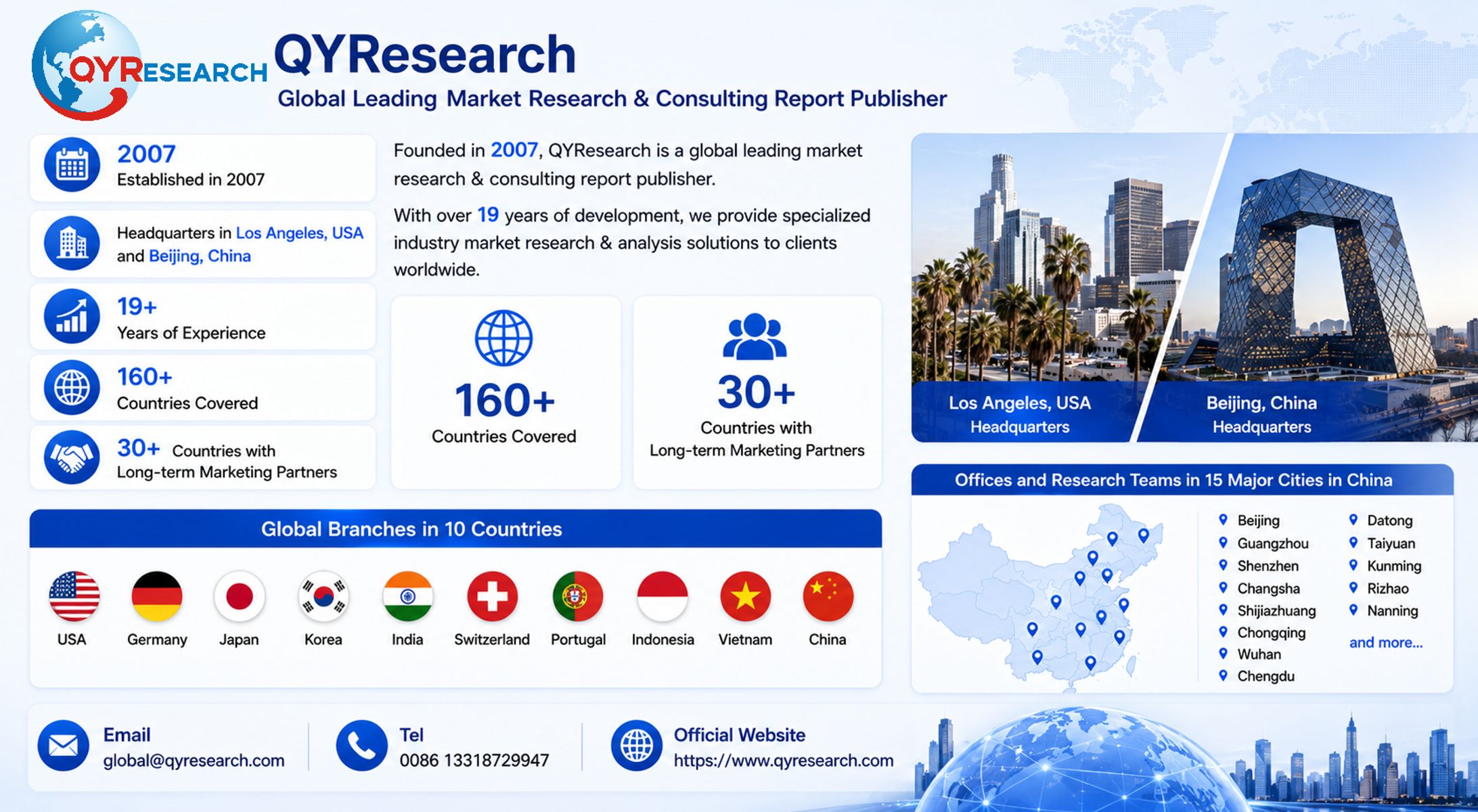
QYResearch founded in California, USA in 2007, which is a leading global market research and consulting company. Our primary business include market research reports, custom reports, commissioned research, IPO consultancy, business plans, etc. With over 19 years of experience and a dedicated research team, we are well placed to provide useful information and data for your business, and we have established offices in 7 countries (include United States, Germany, Switzerland, Japan, Korea, China and India) and business partners in over 30 countries. We have provided industrial information services to more than 60,000 companies in over the world.
Contact Us:
If you have any queries regarding this report or if you would like further information, please contact us:
QY Research Inc.
Add: 17890 Castleton Street Suite 369 City of Industry CA 91748 United States
EN: https://www.qyresearch.com
Email: global@qyresearch.com
Tel: 001-626-842-1666(US)
JP: https://www.qyresearch.co.jp
クレジット
イラストレーター


あなたのforiioを無料で作成
RGB Color Sorter Market Trends: growing at a CAGR of 5.2% from 2026 to 2032
QY Research Inc. (Global Market Report Research Publisher) announces the release of 2025 latest report “RGB Color Sorter- Global Market Share and Ranking, Overall Sales and Demand Forecast 2026-2032”. Based on current situation and impact historical analysis (2020-2024) and forecast calculations (2026-2032), this report provides a comprehensive analysis of the global RGB Color Sorter market, including market size, share, demand, industry development status, and forecasts for the next few years.
The global market for RGB Color Sorter was estimated to be worth US$ 1270 million in 2025 and is projected to reach US$ 1811 million, growing at a CAGR of 5.2% from 2026 to 2032.
【Get a free sample PDF of this report (Including Full TOC, List of Tables & Figures, Chart)】
https://www.qyresearch.com/reports/6710368/rgb-color-sorter
RGB Color Sorter Market: Technology Definition, Product Segmentation, and Industry Dynamics
1. Market Definition and Technology Overview
RGB Color Sorters are automated intelligent sorting systems based on RGB color vision technology, machine vision algorithms, and high-speed automatic control systems for material color detection and intelligent separation. These machines are widely used in grain processing, food processing, nut sorting, tea selection, plastic recycling, ore classification, and chemical raw material screening industries. The equipment utilizes high-brightness LED light sources, RGB industrial cameras, and image processing systems to rapidly analyze the color, shape, size, and surface defects of materials. Combined with artificial intelligence algorithms and high-speed air-jet ejector systems, RGB Color Sorters can automatically identify and precisely remove discolored particles, impurities, moldy grains, damaged materials, and defective products. Compared with traditional manual sorting methods, RGB Color Sorters offer advantages such as higher sorting speed, greater recognition accuracy, higher automation levels, lower labor costs, and improved operational stability, significantly enhancing product purity and production efficiency. With the continuous advancement of artificial intelligence, machine vision, and industrial automation technologies, RGB Color Sorters are evolving toward high-definition imaging, multi-spectrum integration, AI intelligent recognition, high-speed low-energy operation, and cloud-based data management, becoming one of the core intelligent sorting technologies in modern food processing and industrial automation.
2. Market Size and Growth Forecast
The global RGB Color Sorter market is expected to reach USD 1,270.23 million in 2025, advancing at a compound annual growth rate (CAGR) of 5.2%, reflecting steady demand driven by food safety requirements and industrial automation trends.
3. Product Segmentation by Structure
The market is segmented by mechanical structure, each designed for specific material handling requirements.
Belt-type RGB color sorters use conveyor belts for material transportation and are suitable for large, fragile, or irregular-shaped materials. These systems offer stable operation and high sorting accuracy, making them widely used in nuts, ores, and plastic recycling industries.
Chute-type RGB color sorters utilize gravity-fed material flow for high-speed sorting and are mainly used in rice, grain, and seed processing industries. These machines feature simple structures and high throughput for continuous large-scale production.
Crawler-type RGB color sorters focus on stable conveying of difficult materials and are suitable for glass, ores, and industrial particle sorting. These systems reduce material rolling and improve image recognition stability.
4. Product Segmentation by Identification Technology
The market is also segmented by identification technology, reflecting different levels of inspection capability.
Single-CCD color sorters use a single-sided visual recognition system and are relatively cost-effective for standard grain and basic industrial sorting applications. These machines feature compact structures and simple maintenance.
Dual-CCD color sorters are equipped with dual-sided high-speed visual inspection systems capable of detecting color differences and defects on both sides of materials. These systems provide higher sorting precision and impurity detection performance for premium agricultural and industrial applications.
5. Competitive Landscape
The global market features a diverse field of established industrial equipment manufacturers and specialized sorting technology companies. Key market participants include Satake (Japan), TOMRA (Norway), Bühler Group (Switzerland), Lauffer Vision (United Kingdom), Mogensen (Germany), Pellenc ST (France), Senro BV (Netherlands), Picvisa (Spain), Cimbria (Denmark), Navasasyam Dandekar (India), Veterans Sorting Machines (India), Anzai Manufacturing (Japan), Mihoshi Sorter (China), Growking Optoelectronic (China), PEAKS-ECO (China), Zhongke Optic-electronic Color Sorter Machinery (China), Meyer Optoelectronic (China), Kelida Intelligent Equipment (China), Taihe Intelligent Technology (China), and Jiexun Optoelectronic Technology (China).
6. Industry Chain Analysis
The RGB Color Sorter industry chain is structured across three key segments. The upstream segment mainly includes suppliers of LED light sources, CMOS and CCD image sensors, industrial cameras, optical lenses, AI algorithm chips, high-speed ejector valves, PLC control systems, conveyor systems, semiconductor devices, and precision mechanical structures. Representative upstream companies include Sony, Omron, Keyence, Basler, NVIDIA, Intel, Siemens, SICK AG, and Hamamatsu Photonics. The midstream sector mainly consists of RGB Color Sorter manufacturers, intelligent sorting equipment companies, and industrial automation system integrators, including Bühler Group, TOMRA, Satake, Meyer Optoelectronic, and Anhui Jiexun Optoelectronic Technology. Downstream applications are widely distributed across grain processing, food processing, nut sorting, tea processing, plastic recycling, ore sorting, and chemical raw material screening industries. Representative end-user companies include Nestlé, Cargill, Veolia, Bunge, as well as various grain-processing and recycling enterprises. Overall, the industry is evolving toward high-definition machine vision, AI intelligent recognition, high-speed automation, and multi-spectrum integration, continuously driving the upgrade of intelligent color sorting equipment.
7. Key Market Drivers
Several powerful forces are propelling sustained market growth. The global trend toward food processing upgrades, food safety improvement, and industrial automation is continuously driving demand for RGB color sorters. As industries such as rice processing, grains, nuts, coffee beans, plastic recycling, and ore processing place higher requirements on product quality, manufacturers are increasingly emphasizing accurate detection and automatic removal of discolored particles, impurities, and defective materials. Meanwhile, rising labor costs, labor shortages, and the development of smart manufacturing are accelerating the adoption of automated sorting equipment. In addition, advances in AI visual recognition, high-speed CCD inspection, and intelligent sorting algorithms are continuously improving sorting accuracy, processing efficiency, and operational stability.
8. Key Market Restraints
The industry faces several notable challenges. High-end RGB color sorters require advanced optical lenses, CCD sensors, high-speed ejector valves, image processing systems, and AI algorithms, resulting in relatively high development, manufacturing, and maintenance costs. For some small and medium-sized processing companies, the high initial investment may limit purchasing willingness. Differences in material color, shape, transparency, and surface texture create greater challenges for equipment adaptability and algorithm training. Furthermore, increasing competition in the industry, especially in low- and mid-end markets, is intensifying pricing pressure and reducing profit margins for some manufacturers.
9. Key Market Opportunities
Promising opportunities are emerging from multiple directions. The growth of agricultural deep processing, recycling industries, new energy material sorting, and premium food processing is creating new opportunities for the RGB color sorter industry. More companies are adopting intelligent optical sorting systems to improve automation, reduce labor dependence, and enhance product consistency. Developments in AI deep learning, multispectral recognition, cloud-based data management, and industrial IoT technologies are driving color sorting equipment toward smarter, more remote, and digitalized operations. In addition, stricter global environmental policies and the expansion of the circular economy are increasing demand for sorting systems used in plastic, glass, and metal recycling.
10. Barriers to Entry
The RGB color sorter industry presents significant entry barriers as a technology-intensive equipment manufacturing sector requiring high precision in optical recognition, image-processing algorithms, high-speed ejector valve control, and overall machine stability. New entrants usually need significant time to accumulate technical expertise and customer references. The equipment also involves complex mechanical design, long-term continuous operation testing, and extensive material database training, resulting in long development cycles. Moreover, food and industrial customers demand high reliability, strong after-sales service, and stable long-term performance. Leading companies therefore maintain strong advantages in branding, distribution channels, core algorithms, and global service networks, creating substantial market entry barriers for newcomers.
The report provides a detailed analysis of the market size, growth potential, and key trends for each segment. Through detailed analysis, industry players can identify profit opportunities, develop strategies for specific customer segments, and allocate resources effectively.
The RGB Color Sorter market is segmented as below:
By Company
TOMRA
Bühler Group
Lauffer Vision
Mogensen
Pellenc ST
Senro BV
Picvisa
Cimbria
Satake
Anzai Manufacturing
Navasasyam Dandekar
Veterans Sorting Machines
Mihoshi Sorter
Growking Optoelectronic
PEAKS-ECO
Zhongke Optic-electronic Color Sorter Machinery
Meyer Optoelectronic
Kelida Intelligent Equipment
Taihe Intelligent Technology
Jiexun Optoelectronic Technology
Segment by Type
Belt-type
Chute-type
Caterpillar-type
Segment by Application
Food
Chemicals
Minerals
Plastics
Others
Each chapter of the report provides detailed information for readers to further understand the RGB Color Sorter market:
Chapter 1: Introduces the report scope of the RGB Color Sorter report, global total market size (valve, volume and price). This chapter also provides the market dynamics, latest developments of the market, the driving factors and restrictive factors of the market, the challenges and risks faced by manufacturers in the industry, and the analysis of relevant policies in the industry. (2021-2032)
Chapter 2: Detailed analysis of RGB Color Sorter manufacturers competitive landscape, price, sales and revenue market share, latest development plan, merger, and acquisition information, etc. (2021-2026)
Chapter 3: Provides the analysis of various RGB Color Sorter market segments by Type, covering the market size and development potential of each market segment, to help readers find the blue ocean market in different market segments. (2021-2032)
Chapter 4: Provides the analysis of various market segments by Application, covering the market size and development potential of each market segment, to help readers find the blue ocean market in different downstream markets.(2021-2032)
Chapter 5: Sales, revenue of RGB Color Sorter in regional level. It provides a quantitative analysis of the market size and development potential of each region and introduces the market development, future development prospects, market space, and market size of each country in the world..(2021-2032)
Chapter 6: Sales, revenue of RGB Color Sorter in country level. It provides sigmate data by Type, and by Application for each country/region.(2021-2032)
Chapter 7: Provides profiles of key players, introducing the basic situation of the main companies in the market in detail, including product sales, revenue, price, gross margin, product introduction, recent development, etc. (2021-2026)
Chapter 8: Analysis of industrial chain, including the upstream and downstream of the industry.
Chapter 9: Conclusion.
Benefits of purchasing QYResearch report:
Competitive Analysis: QYResearch provides in-depth RGB Color Sorter competitive analysis, including information on key company profiles, new entrants, acquisitions, mergers, large market shear, opportunities, and challenges. These analyses provide clients with a comprehensive understanding of market conditions and competitive dynamics, enabling them to develop effective market strategies and maintain their competitive edge.
Industry Analysis: QYResearch provides RGB Color Sorter comprehensive industry data and trend analysis, including raw material analysis, market application analysis, product type analysis, market demand analysis, market supply analysis, downstream market analysis, and supply chain analysis.
and trend analysis. These analyses help clients understand the direction of industry development and make informed business decisions.
Market Size: QYResearch provides RGB Color Sorter market size analysis, including capacity, production, sales, production value, price, cost, and profit analysis. This data helps clients understand market size and development potential, and is an important reference for business development.
Other relevant reports of QYResearch:
Global RGB Color Sorter Sales Market Report, Competitive Analysis and Regional Opportunities 2026-2032
Global RGB Color Sorter Market Outlook, In
Depth Analysis & Forecast to 2032
Global RGB Color Sorter Market Research Report 2026
About Us:
QYResearch founded in California, USA in 2007, which is a leading global market research and consulting company. Our primary business include market research reports, custom reports, commissioned research, IPO consultancy, business plans, etc. With over 19 years of experience and a dedicated research team, we are well placed to provide useful information and data for your business, and we have established offices in 7 countries (include United States, Germany, Switzerland, Japan, Korea, China and India) and business partners in over 30 countries. We have provided industrial information services to more than 60,000 companies in over the world.
Contact Us:
If you have any queries regarding this report or if you would like further information, please contact us:
QY Research Inc.
Add: 17890 Castleton Street Suite 369 City of Industry CA 91748 United States
EN: https://www.qyresearch.com
Email: global@qyresearch.com
Tel: 001-626-842-1666(US)
JP: https://www.qyresearch.co.jp
クレジット
イラストレーター